
AGADEZ, Niger — At least 49 individuals have tragically died of dehydration in a remote corridor of the Sahara desert in northern Niger after the transport truck carrying them suffered a catastrophic mechanical breakdown, local regional authorities confirmed.
The victims, all identified as Nigerien nationals, were returning from neighboring Mali where they had attended a major Muslim religious festival, before becoming stranded without water roughly 80 kilometers (50 miles) west of Assamaka—a critical desert border crossing between Niger and Algeria.
Okay News reports that the Agadez Region Governor, Gen. Ibra Boulama Issa, issued a formal statement on Friday, June 5, 2026, describing the grim recovery operations. According to the governorate, the transport lorry had initially departed from the Malian town of Telhandek but veered heavily off its planned route into treacherous terrain before its engine failed. Despite repeated attempts over several days by the driver, his apprentice, and the passengers to repair the vehicle, their efforts were unsuccessful as extreme desert temperatures rapidly depleted their remaining water supplies.
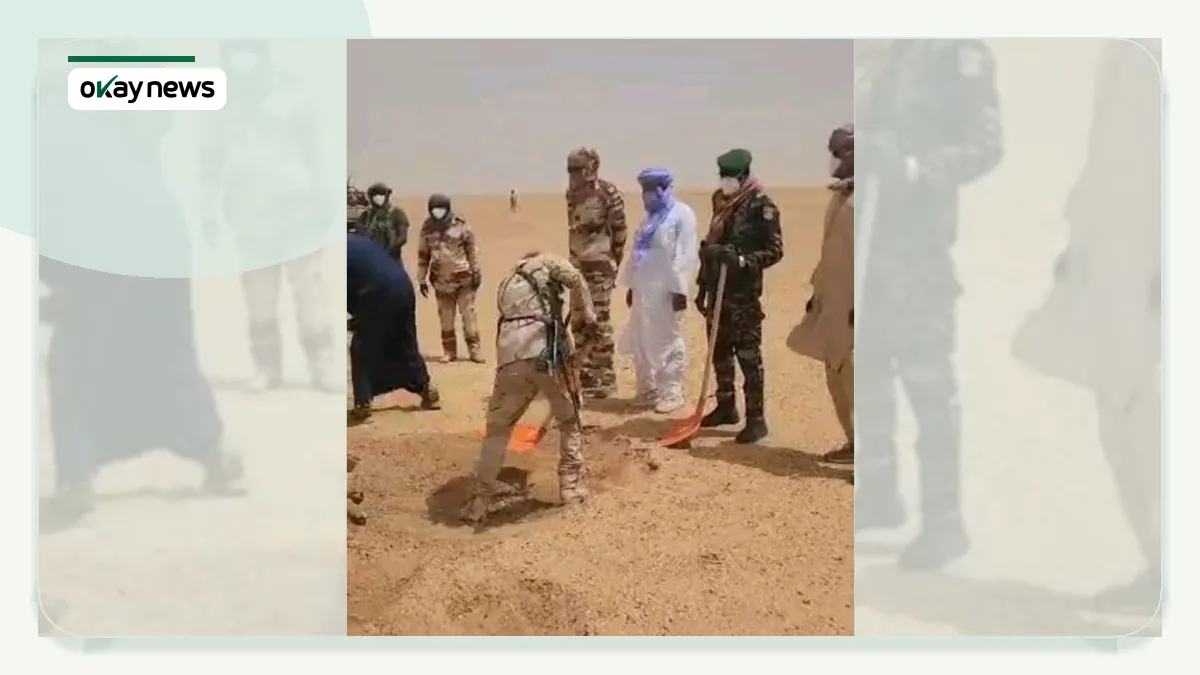
The tragedy was uncovered only after two survivors managed to trek more than 50 kilometers (31 miles) across the open sands to reach a localized water source, eventually making it to the military outpost at Assamaka to sound an emergency alarm. “On the spot, the findings were particularly disturbing. Dozens of lifeless bodies were found under the immobile truck and in its surroundings,” the governorate statement read, adding that a specialized rescue team was forced to bury the victims in mass graves at the scene due to advanced decomposition.
While returning from the grim site, the rescue team—which included heavily armed Nigerien military units—managed to avert a second catastrophe. Operatives intercepted another broken-down truck carrying more than 60 travelers that had been stranded for three days following a complete battery failure after departing Harouba, Mali. Troops immediately distributed emergency water and rations to the exhausted passengers and assisted in mechanical repairs, enabling them to safely resume their journey. Governor Boulama Issa noted that the double incidents underscore the severe vulnerabilities facing West African citizens engaging in cross-border trade, forced to traverse highly unstable and hostile geographical terrains simply to survive.