By using this site, you agree to the Privacy Policy and Terms of Use.
Accept
Okay News
  • News
  • Politics
  • Business
  • Technology
  • Security
  • Entertainment
  • Sports
Reading: U.N. report: World population reaches 7.7bn people
Font ResizerAa
Okay NewsOkay News
  • News
  • Politics
  • Business
  • Technology
  • Security
  • Entertainment
  • Sports
Follow US
2026 © Okay International Limited - All rights reserved
News

U.N. report: World population reaches 7.7bn people

Saddam Yusuf Saleh
By
Saddam Yusuf Saleh
BySaddam Yusuf Saleh
A reporter for Okay Nigeria (Okay.ng)
Follow:
Published: 2019/06/17
2 Min Read
Share
World Population
World Population
SHARE

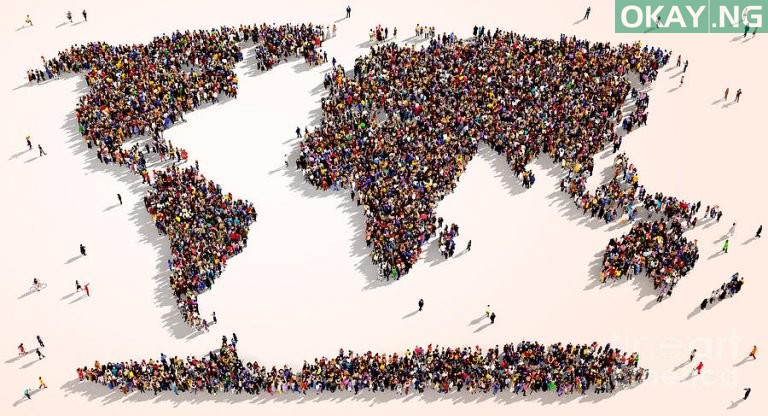
The population of the world has reached 7.7 billion, according to a report released by the United Nations Population Division on Monday.

The medium-variant projection indicates that the global population could grow to around 8.5 billion in 2030, 9.7 billion in 2050, and 10.9 billion in 2100.

According to the World Population Prospect released by the UN, males outnumber females in Nigeria, and the world as a whole, negating the popular belief that women outnumber men in the West African country.

The report reads in part: “The world’s population is projected to grow from 7.7 billion in 2019 to 8.5 billion in 2030 (10% increase), and further to 9.7 billion in 2050 (26%) and to 10.9 billion in 2100 (42%). The population of sub-Saharan Africa is projected to double by 2050 (99%).

- Advertisement -

“Regions that may experience lower rates of population growth between 2019 and 2050 include Oceania excluding Australia/New Zealand (56%), Northern Africa and Western Asia (46%), Australia/New Zealand (28%), Central and Southern Asia (25%), Latin America and the Caribbean (18%), Eastern and South-Eastern Asia (3%), and Europe and Northern America (2%).

“The global fertility rate, which fell from 3.2 births per woman in 1990 to 2.5 in 2019, is projected to decline further to 2.2 in 2050. In 2019, fertility remains above 2.1 births per woman, on average, over a lifetime in sub-Saharan Africa (4.6), Oceania excluding Australia/New Zealand (3.4), Northern Africa and Western Asia (2.9), and Central and Southern Asia (2.4).

“A fertility level of 2.1 births per woman is needed to ensure replacement of generations and avoid population decline over the long run in the absence of immigration.”

Follow Okay News channel on WhatsApp
Add as a preferred source on Google
Follow Okay News on Instagram
- Advertisement -

TAGGED:NigeriaU.N.United Nations Population DivisionWorld
Share This Article
Facebook Pinterest Whatsapp Whatsapp Email Print
Previous Article NBS Report: Nigeria’s inflation rate reaches 11.40% in May
Next Article Taraba residents on rampage as bandits attack village

Stay Connected

FacebookLike
XFollow
InstagramFollow
TiktokFollow
WhatsAppFollow
- Advertisement -

More News

News

EFCC Charges Man Over ₦603 Million Fake NNPC Job Appointment Scheme

By Adamu Abubakar Isa
3 Min Read
News

Migrant Boat Tragedy off Libya Leaves 53 Dead, UN Agency Says

By Adamu Abubakar Isa
3 Min Read
News

Appeal Court Says Senate Had Power To Suspend Natasha Akpoti-Uduaghan

By Oluwadara Akingbohungbe
2 Min Read
Okay NewsOkay News
2026 © Okay International Limited - All rights reserved
  • About Us
  • Advertising
  • Contact
  • Careers
  • Team
Welcome Back!

Sign in to your account

Username or Email Address
Password

Lost your password?

Continue with Facebook