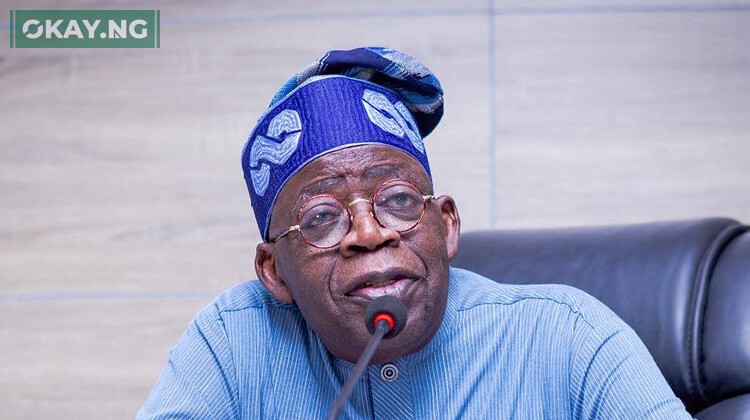
Asiwaju Bola Tinubu, the candidate for All Progressives Congress running to be Nigeria’s president, has outlined his economic programme aimed at putting the country’s economy back on track.
Tinubu highlighted the economic challenges that Nigeria faces, including the COVID-19 pandemic, the war in Ukraine, and the Central Bank of Nigeria’s demonetisation policy that has caused a cash crisis ahead of the elections.
According to Tinubu, the solution to these challenges requires sound implementation of prudent economic policies and a focus on industrialisation and technological innovation.
Tinubu pointed out that Nigeria’s overreliance on crude oil is emblematic of the country’s long-standing challenge, and he emphasized the need to produce more things at home to provide a base for jobs and growth.
The candidate suggested the creation of an environment in which private enterprise can succeed by implementing consistent policies that reassure the business community and competent government that delivers infrastructure and public services.
Drawing from his experience as governor of Lagos between 1999 and 2007, Tinubu highlighted the legacy of technocratic governance instituted by enlisting talent from the private sector, tackling insecurity and crime through better funding for the police force, and investing in public services and infrastructure.
He believes that Nigeria is complex and variegated, and recognizing the strengths of each section of the country and providing the bases on which they can all thrive is the path to economic growth.
Tinubu plans to devolve more powers to the states to provide services and infrastructure projects, as well as more control over law enforcement.
He emphasized that Nigeria needs to focus on industrialisation and technological innovation, and low-interest loans must be channeled towards manufacturers and small- and medium-sized ventures. Tax credits and youth employment incentives will ensure the country’s productive capacity is better utilized.
To bolster food security and dampen imported inflation, Tinubu plans to expand credit to farmers through government-sponsored programs. Commodity boards will be established that guarantee minimum prices for strategic crops to increase certainty and production.
Tinubu also plans to establish agricultural hubs, including a land-clearing program in partnership with international agribusinesses, development agencies, and financial institutions, focusing on Nigeria’s 12 river basins.
Tinubu believes that rationalizing monetary policies that deter investment is essential, and the multiple exchange-rate regime must end to better align with market realities.
Tinubu also plans to ease the squeeze on foreign reserves caused by importing fuel by increasing refinery capacity, such as the Dangote refinery located within the Lekki Free Trade Zone in Lagos, and establishing similar zones across the country to give impetus to manufacturing and industrialization tailored to regional competitive advantages.
The harmful fuel subsidy, estimated to have cost $7.5bn in the first half of 2023, will be ended. The funds will be more productively used in joint investments with the private sector to create jobs in infrastructure, healthcare, education, and agriculture.
Tinubu believes that Nigeria needs not to increase tax rates but improve compliance by overhauling the system and deploying information technology to boost efficiency.
Tinubu’s plan is to bolster economic activity by connecting the nation through road, rail, bridges, and ports financed by rechannelled fuel-subsidy funds, public-private partnerships, and manageable public debt. This will help close the infrastructure gap that stymies growth.
Tinubu emphasized that the success of his government means active stewardship of a flourishing business environment, and private enterprise shall provide the needed jobs and economic growth in Nigeria. Tinubu pledges to deliver the platform on which the private sector and the average Nigerian can succeed.