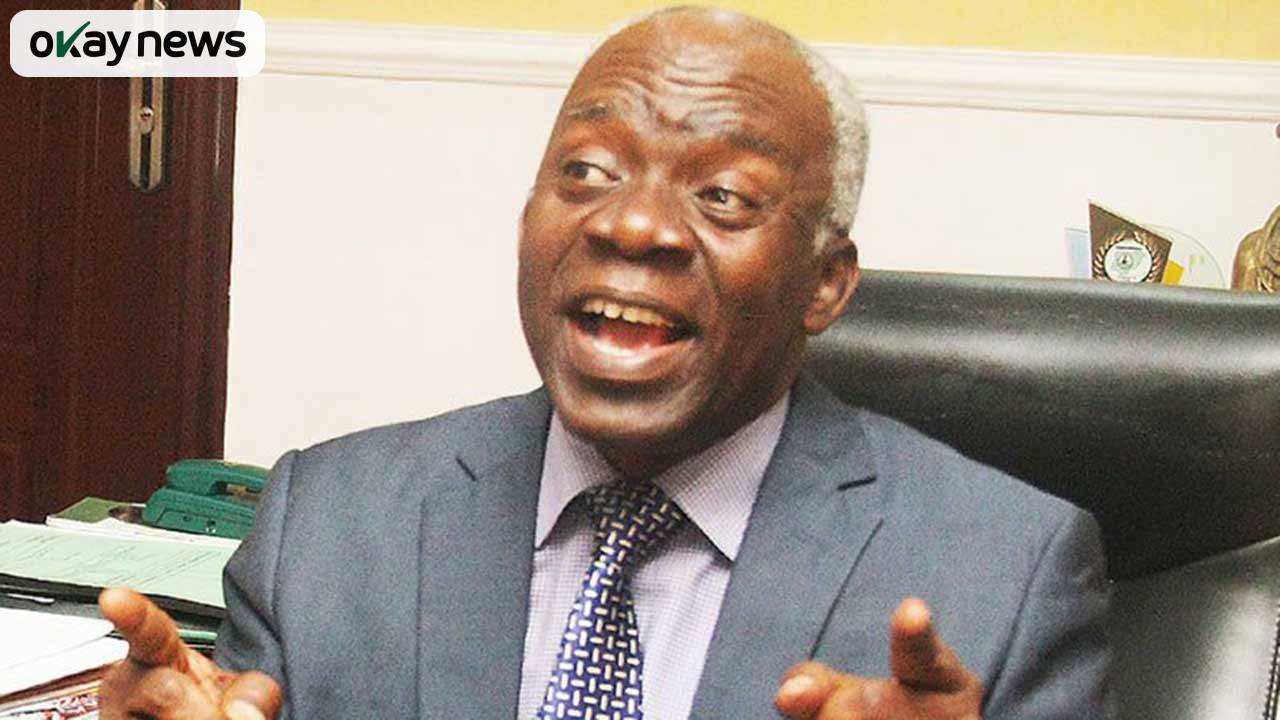
Human rights lawyer and Senior Advocate of Nigeria, Femi Falana, has stated that Nigeria must address major internal problems before it can successfully guide West African nations in stopping the growing trend of military takeovers.
Falana gave this warning during an interview on the Politics Today programme on Channels Television. He explained that the region is dealing with repeated coups, and Nigeria cannot influence stability beyond its borders without resolving challenges within the country. Okay News reports.
According to him, Nigeria must focus on major socioeconomic and political issues that continue to fuel tension. He said, “If we want to have political stability in Nigeria, you must address the crisis of the economy, address poverty, tackle illiteracy, and curb insecurity of lives and property.”
Falana further explained that Nigeria needs to protect civil rights and avoid actions that discourage citizens from speaking freely. He warned that the political atmosphere is becoming more restricted. He said, “You must show that the political space will not shrink as it is now. You have a shrinking of the political space, and that must stop. There must be freedom of expression.”
He added that citizens should not be charged with offences for expressing opinions about national matters. “You cannot be charging people with all manner of offences for expressing their views about the affairs of their country,” he said.
Falana also urged the Independent National Electoral Commission to improve public participation. He said, “More importantly, the Independent National Electoral Commission must open the political space and allow ideological political parties to be registered to challenge the status quo. Right now, the Independent National Electoral Commission is not prepared to open the political space.”
The Senior Advocate of Nigeria stated that many citizens are unhappy with the direction of national policies. According to him, African governments often limit opposition groups, which weakens democracy and encourages instability. He said democratic leaders across Africa should avoid actions that restrict political alternatives.
He said, “Nigeria clearly has its job cut out. If you want to stop coups, you must allow political pluralism in Nigeria. You cannot have a situation where the country is moving towards a one-party state, and you want to export democracy. Nigeria has to put its house in order to align with political pluralism.”
Falana stressed that genuine elections depend on the existence of strong and competitive political parties. He explained that ruling parties in some African countries restrict rivals, which reduces accountability and creates tension.
Asked whether more coups should be expected in the region, he responded, “It will not be the last. I am familiar with the political terrain. Once you put opposition leaders in jail, send them into exile, or kill them, you cannot have political stability.”
Falana also referred to the recent failed coup in the Benin Republic where soldiers led by Lieutenant Colonel Pascal Tigri attempted to overthrow President Patrice Talon. The group took control of the state television station in Cotonou and announced the removal of the President. The coup was, however, stopped within hours by Nigerian troops and the Economic Community of West African States standby force.
Authorities in the Benin Republic confirmed that several people died, at least fourteen suspects were arrested, and Lieutenant Colonel Pascal Tigri is still on the run. The plotters said they acted due to concerns about security, promotions in the military, and limits on political participation ahead of the 2026 election.
The African Union, United Nations, European Union and the Economic Community of West African States all condemned the attempted takeover.
Meanwhile, the Nigerian Senate has granted approval for President Bola Ahmed Tinubu to deploy troops to the Benin Republic as part of the regional security efforts.