



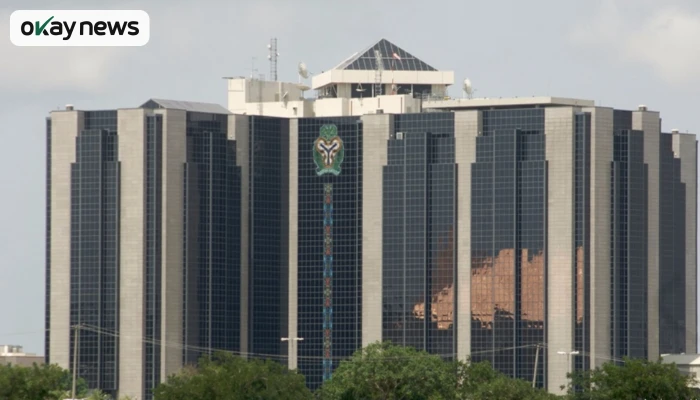
Nigeria’s banking sector experienced a sharp rise in non-performing loans in 2025, reaching an estimated 7 per cent ratio after the Central Bank of Nigeria (CBN) terminated regulatory forbearance granted during the COVID-19 pandemic.
Okay News reports that the increase pushed the industry above the prudential limit of 5 per cent, as previously restructured facilities crystallised into standard classifications.
The CBN attributed the spike directly to the withdrawal of special relief measures that had allowed banks to avoid downgrading pandemic-affected loans.
Despite the elevated bad loans, the apex bank affirmed that the financial system remained stable throughout 2025.
Liquidity ratios averaged 65 per cent, well exceeding the 30 per cent minimum, while capital adequacy stood at 11.6 per cent, above the 10 per cent threshold.
These strong buffers enabled banks to absorb shocks and maintain normal operations without distress.
The ongoing recapitalisation exercise is expected to further bolster balance sheets and enhance lending capacity to support economic growth.
The CBN cautioned that rising non-performing loans heighten credit risk, particularly amid high interest rates and borrower pressures.
It warned of potential impacts on profitability, lending availability, and overall resilience if not managed effectively.
To counter the threat, the regulator advocated deeper adoption of the Global Standing Instruction framework to improve loan recoveries and repayment discipline.
Stronger recoveries would help mitigate losses and preserve capital, especially in micro, small, and medium enterprise (MSME) and retail segments.
Monetary conditions remained tight for most of 2025 to prioritise price and exchange rate stability, though the Monetary Policy Rate saw a slight easing in September.
Looking to 2026, the sector outlook is broadly stable, provided banks strengthen risk management, diversify portfolios, and sustain robust capital positions.
Recent directives have restricted dividend payouts, executive bonuses, and overseas investments for banks under forbearance to prioritise domestic capital retention.





 terminated regulatory forbearance granted during the COVID-19 pandemic.)