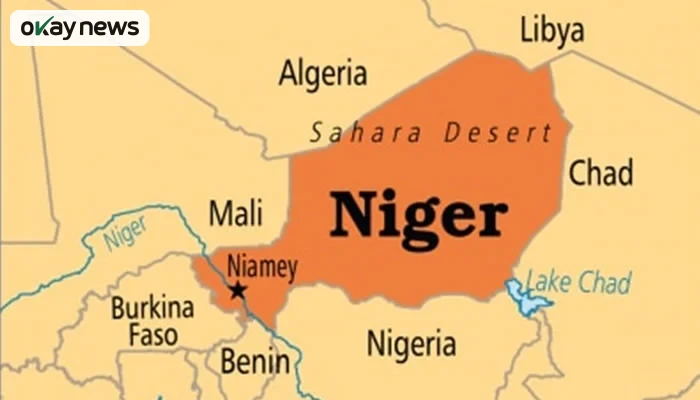
Heavy gunfire and loud explosions were reported early on Thursday, 29 January 2026, near Diori Hamani International Airport in Niamey, the capital of Niger, a West African country in the Sahel region.
Residents living close to the airport said the shooting started shortly after midnight and was followed by blasts that lit up the sky. Okay News reports that several videos filmed in the area showed streaks of light overhead, with repeated explosions in the background.
Other images shared by locals appeared to show flames rising several metres high, as well as burnt vehicles and cars left badly damaged.
The airport, Niger’s main international gateway, also houses an air force base and sits about 10 kilometres from the presidential palace in Niamey, where the country’s military leaders are based.
People in nearby neighbourhoods said the sounds of gunfire and explosions eased after about two hours, and calm later returned. They also reported hearing sirens as fire trucks moved in the direction of the airport in the early hours of the morning.
As of the time of reporting, it was not immediately clear what triggered the incident, and there was no confirmed information on injuries or deaths.
Niger has faced repeated attacks linked to jihadist groups operating across the wider Sahel. The country has been led for more than two years by General Abdourahamane Tiani, the head of the military junta that removed the elected civilian president in 2023.
An online activist known for supporting military rule, Ibrahim Bana, posted a video on Facebook urging residents to come out in the streets of the capital to “defend the country.”
The airport is also the headquarters of a joint force set up by Niger, Burkina Faso and Mali to fight armed groups blamed for deadly violence across the region. Since the military takeover, Niger’s leaders have pushed out French and United States forces that had previously supported counterterrorism operations.
Niger and its neighbours, which are also governed by military juntas, have formed a new confederation called the Alliance of Sahel States and announced plans for a 5,000-strong force for joint military operations.
Conflict monitors have warned that violence remains severe. Armed Conflict Location and Event Data (ACLED), a non-governmental organisation that tracks conflict and reported deaths worldwide, said nearly 2,000 people were killed in Niger in 2025 due to jihadist-related violence.
Separately, a large uranium shipment with an unknown buyer reportedly left northern Niger in late November and has remained stuck at the airport for weeks, adding to concerns about security and disruptions around the facility.