Nigeria’s state-run oil company, the Nigerian National Petroleum Company Limited (NNPC Ltd), says the country’s government-owned refineries were operating at heavy losses, leading its new management to stop production to prevent further financial damage.
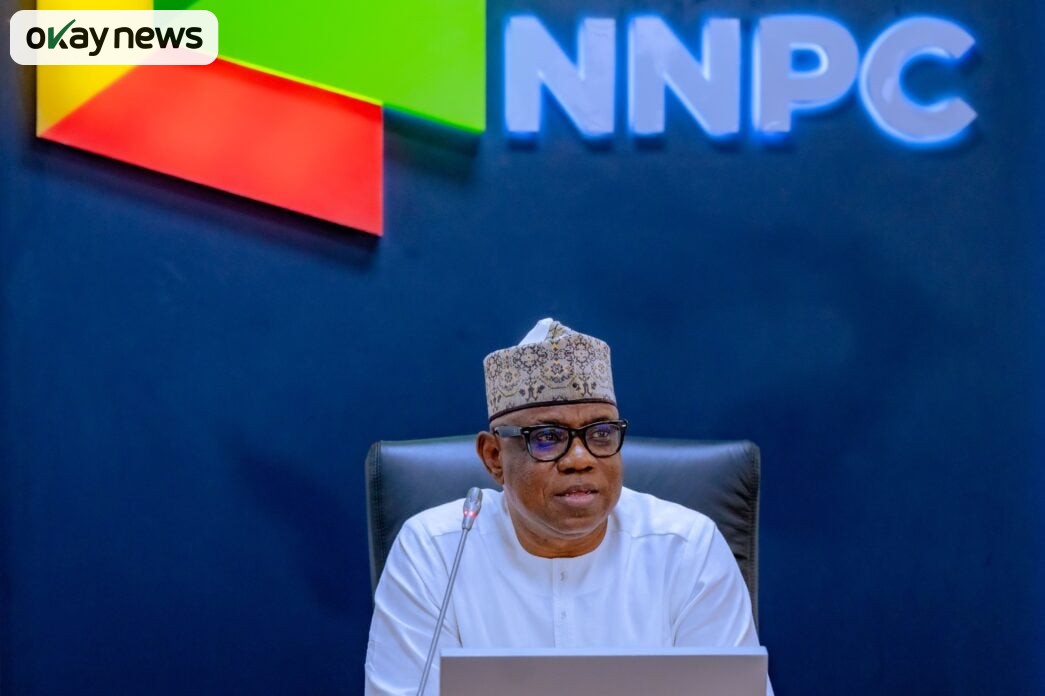
Speaking on Wednesday, 4 February 2026, in Abuja, Nigeria’s capital, the Group Chief Executive Officer of NNPC Ltd, Bashir Bayo Ojulari, made the disclosure during a fireside chat titled “Securing Nigeria’s Energy Future” at the Nigeria International Energy Summit 2026, a major gathering of government officials and energy industry leaders.
Ojulari said public frustration over the refineries was understandable, considering the large amount of public funding spent on repairs and the high expectations Nigerians had for the facilities.
“On the refineries, Nigerians were angry. A lot of money has been spent, and expectations were very high. So we were under extreme pressure,” he said.
He explained that refining was not his main area of experience, noting that most of his career had been in the upstream sector, which focuses on oil exploration and production. However, he said the responsibility of the job required him to learn quickly.
“My background is upstream, so I was on a vertical learning curve. You are accountable, so you must learn very quickly. Otherwise, there is no escape,” he said.
Okay News reports that once the new leadership carried out a detailed review of the refineries, the scale of the losses became difficult to ignore.
“The first thing that became clear, and I want to say this very clearly, is that we were running at a monumental loss to Nigeria. We were just wasting money. I can say that confidently now,” Ojulari stated.
He said NNPC had been sending crude oil cargoes into the refineries every month, but the plants were only operating at about 50 to 55 per cent capacity, while spending heavily on daily operations and contractor costs. According to him, the outcome was value leakage, where the country was putting in expensive crude but not getting enough usable, high-value products back.
“We were spending a lot of money on operations, a lot of money on contractors. But when you look at the net, we were just leaking away value,” he said.
Ojulari added that while some losses can happen during investment and rehabilitation, there should normally be a clear path to recovery. In this case, he said such a path was not visible.
“Sometimes you make a loss during investment, but you have a line of sight to recovery. That line of sight was not clear here,” he said.
Because of that, he said the first major step taken by his team was to stop operations and conduct a quick reassessment, with the intention of reopening only if the necessary conditions were in place.
“We decided to stop the refinery and do a quick check. We planned that if things were lined up, we would reopen and work on them,” he said.
He also raised concerns about the quality and market value of some refinery outputs, using the Port Harcourt Refinery in Rivers State, southern Nigeria, as an example. He said crude processed there was producing more mid-grade products, and that when the value of what came out was compared with the value of what went in, it did not make commercial sense.
“The crude we were taking into Port Harcourt was producing mid-grade products. When you aggregate their value compared to what you put in, it was a waste,” he said.
Ojulari acknowledged that stopping operations could be politically sensitive, especially in a country where fuel supply and pricing often drive public pressure. He said NNPC had, over the years, faced demands to keep refineries running to support local fuel availability, but he argued that long-term losses were not sustainable for a company expected to operate on business principles.
“There were political pressures to keep the refinery product, lots of pressure. But when you have been trained for over 35 years to focus on commerciality and profitability, you cannot sleep with that,” he said.
Nigeria has four state-owned refineries: two plants in Port Harcourt, plus facilities in Warri, Delta State, southern Nigeria, and Kaduna, Kaduna State, northern Nigeria. For decades, the refineries have operated far below capacity or shut down completely, despite repeated turnaround maintenance projects.
The poor performance of these plants has forced Africa’s largest oil producer to depend heavily on imported refined fuel, even though it is a major crude oil exporter. Between 2015 and 2023, different administrations approved multiple rehabilitation contracts, but domestic refining output remained very low, increasing scrutiny of NNPC’s performance and spending.
Ojulari’s remarks are among the clearest public admissions by an NNPC chief executive that running the refineries under the existing conditions was economically difficult to justify. His comments also point to the broader shift encouraged by the Petroleum Industry Act (PIA), Nigeria’s oil sector reform law, which aims to push NNPC Ltd toward stronger commercial discipline, even in politically sensitive areas like domestic refining.