


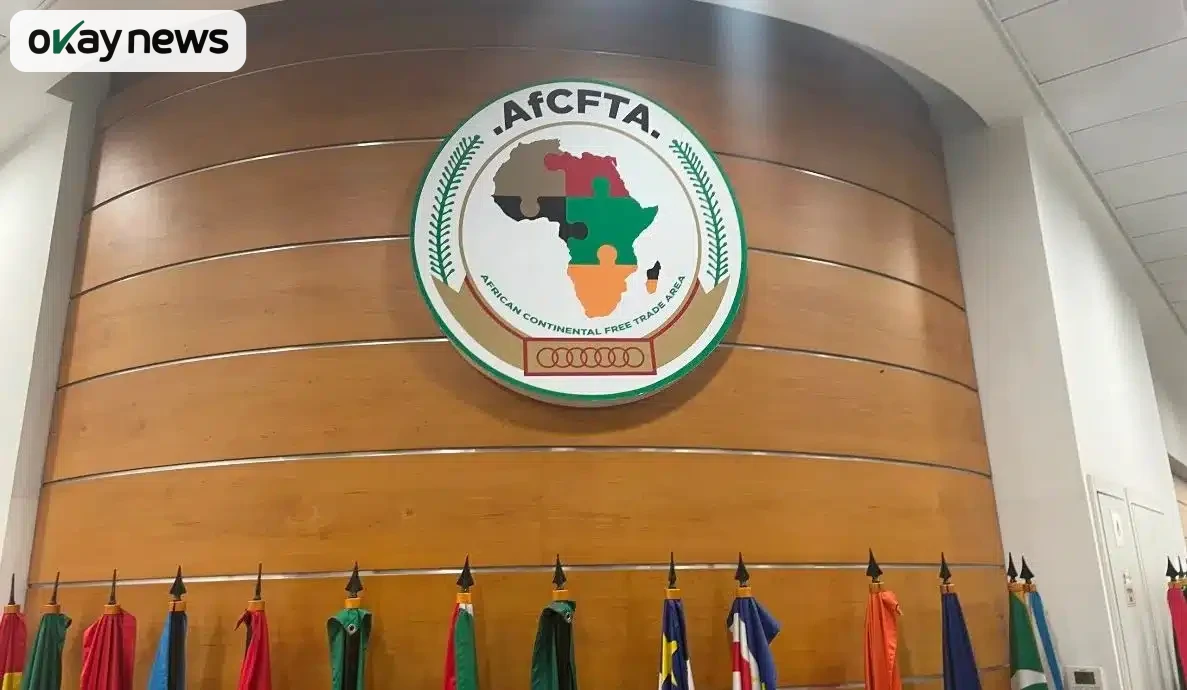
ABUJA, Nigeria — The Federal Government has launched simplified trade toolkits in English, Arabic, and Hausa to help businesses navigate the rules of the African Continental Free Trade Area (AfCFTA) and increase non-oil exports, Minister of Industry, Trade and Investment, Dr. Jumoke Oduwole, announced on Monday, April 27, 2026, during the North-West Subnational Tour in Kano.
Okay News reports that the toolkits are designed to break down complex trade requirements, including rules of origin, customs procedures, standards compliance, and market entry conditions, particularly for Small and Medium Enterprises (SMEs).
Oduwole said regulatory agencies will be on hand in Kano to offer business registration, product certification, and certificates of origin. She also disclosed plans for live export simulations and the introduction of a “ One Local Government, One Export Product ” initiative.
“We want every local government to identify at least one product they can export to Africa. We are making the process easy and immediate,” Oduwole said.
She noted that an air cargo corridor inaugurated under AfCFTA has cut freight costs by roughly 75 percent on some African routes, and that Nigerian food items, textiles, and processed goods are in growing demand across the continent.
Governor Abba Kabir-Yusuf of Kano, represented by Umar Ibrahim, Secretary to the State Government, called Kano “Africa’s historic commercial hub” and said the state is leveraging AfCFTA opportunities through industrialisation, logistics expansion, and SME development. “AfCFTA must work for the growth of traders, processors, youths, ICT hubs, and industries,” the governor stated.
Last month, the AfCFTA Secretariat selected Nigeria as the pilot country for the Simplified Trade Regime (STR) in West Africa, a framework to ease procedures for small-scale cross-border traders. Nigeria Customs Service spokesperson Abdullahi Maiwada said the move is critical to reducing customs bottlenecks.
A market survey by the Network of Practicing Non-Oil Exporters of Nigeria (NPNEN) , supported by UK International Development, found that despite non-oil exports hitting N12.36 trillion in 2025, utilisation of AfCFTA preferences by smaller exporters remains low.


 and increase non-oil exports, Minister of Industry, Trade and Investment, Dr. Jumoke Oduwole, announced on Monday, April 27, 2026, during the North-West Subnational Tour in Kano.)