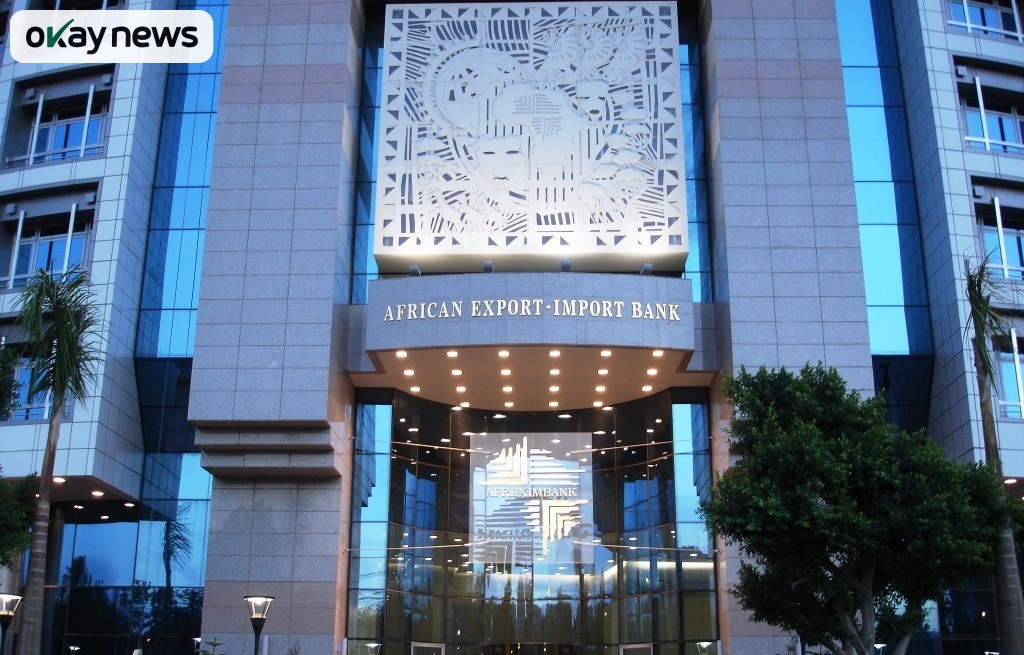
African Export-Import Bank (Afreximbank) has called on the Federal Government of Nigeria to use the ongoing bank recapitalisation exercise as a strategic lever to narrow Africa’s estimated $80 billion to $120 billion annual trade finance gap, arguing that the move could reposition Nigeria as a central driver of intra-African commerce.
Okay News reports that the call was made in Lagos by Afreximbank Group Chief Economist and Managing Director for Research and Trade Intelligence, Dr. Yemi Kale, during an Ecobank Customer Forum focused on Nigeria’s export potential and regional integration.
Kale said Nigeria’s size and economic weight give it a unique responsibility under the African Continental Free Trade Area (AfCFTA) to mobilise capital, strengthen domestic production, and support cross-border trade across the continent.
“Nigeria is a very large economy. Not only do we have a big domestic market, but we also have a potentially large market that can benefit the entire continent. The policies introduced to stabilise the macroeconomic environment are helpful, and I would advise retaining them. We have to keep faith with the reforms,” he stated.
He stressed that Africa’s persistent trade finance shortfall cannot be addressed without stronger banks, deeper capital buffers, and more aggressive lending to exporters and small and medium-sized enterprises.
“Recapitalisation of the banks is important. You cannot lend to businesses to grow, expand or import machinery if you do not have enough capital. How do Nigerian banks support deepening intra-African trade if they do not have enough capital?” Kale queried.
According to him, stronger bank balance sheets would expand lending capacity, enable export-oriented manufacturing, and integrate Nigerian businesses into regional value chains.
“By increasing export orientation, you increase the ability of banks to lend more to domestic businesses and exporters. There are significant benefits for the Nigerian economy, especially in improving intra-African trade,” he added.
Kale linked the banking reforms to Nigeria’s ambition of building a $1 trillion economy, warning that growth must be anchored on competitiveness and productivity rather than consumption alone.
“There are two ways to grow: you produce goods and services and sell them to consumers within Nigeria, across the continent, and preferably outside the continent. But the only way you can sell goods outside Nigeria is if they are competitive,” he said.
He argued that fixing infrastructure gaps, regulatory bottlenecks, and logistics inefficiencies would lower production costs, reduce inflationary pressure, and improve household purchasing power.
“If you fix the ease of doing business, you reduce the cost of production. Goods become cheaper, inflation comes down and purchasing power improves. Higher demand leads to higher production, more jobs and more income. That is how you significantly grow the economy and move towards a one trillion dollar target,” Kale explained.
On Nigeria’s trade structure, he criticised the continued reliance on exporting raw materials while importing finished goods, attributing the imbalance to weak domestic competitiveness.
“The reason we export raw materials and import finished goods is that we do not have a competitive production structure,” he noted.
Also speaking at the forum, Ecobank Nigeria’s Managing Director, Bolaji Lawal, said the engagement was designed to identify practical pathways to accelerate exports and deepen regional integration.
“Our second customer forum in the series focuses on strengthening Nigeria’s economic transformation. We would like to explore how we can drive exports, promote regional integration and, most importantly, support Nigeria’s economic transformation as we work towards building a $1 trillion economy,” he said.
Lawal added that Ecobank’s presence across 33 African countries gives it a strategic advantage in facilitating cross-border trade.
“At Ecobank, we pride ourselves on being the bank with a footprint in 33 African countries, and trade is at the heart of everything we do. We are keen to share knowledge and discuss how our platform can better support trade across Africa and beyond,” he said.
From a regulatory perspective, an official of the Central Bank of Nigeria emphasised that deeper regional coordination is critical to unlocking Africa’s trade potential.
Tiku Allu, of the Import and Trade Relations Office at the CBN, said Africa’s greatest opportunity lies in strengthening collaboration across borders and expanding backward integration within the continent.
“The opportunity we have as a continent lies in better collaboration and integration. There are opportunities in areas such as backward integration, where banks can play a critical role by providing access to the capital and financing structures required to support production within the region, rather than relying on imports from outside,” he said.