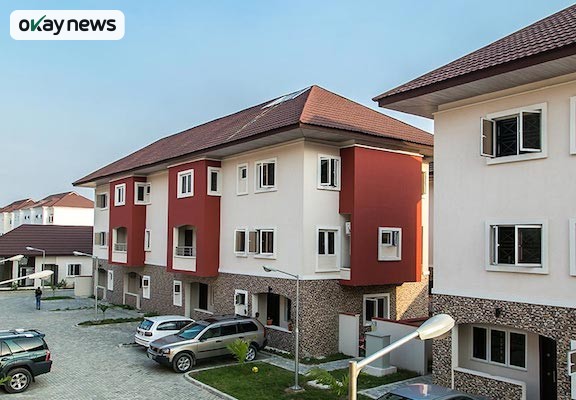
Lagos, Nigeria – Africa is contending with a housing deficit of over 50 million units, a gap that could balloon to 130 million by 2030 unless urgent policy and investment measures are put in place. The projection comes from Festus Adebayo, convener of the Africa International Housing Show (AIHS), ahead of the event’s 20th edition.
Okay News reports that rapid population growth, accelerating urbanisation, and weak housing‑finance systems are driving the shortfall. Over 200 million Africans already live in informal settlements, and the deficit is putting pressure on jobs, urban productivity, public health, and social stability.
Adebayo warned that structural weaknesses such as limited access to long‑term finance, high construction costs, and fragmented land‑administration systems are deepening the crisis. He said if reforms are delayed, the mismatch between demand and supply will grow even more severe. Nigeria has the largest shortfall, estimated at 17–28 million units, followed by the Democratic Republic of Congo and South Africa, with several other countries including Kenya, Ghana, Tanzania, Uganda, Egypt, and Madagascar also affected.
The continent’s housing‑finance gap exceeds $1.4 trillion, hampering large‑scale building by both public and private actors. High interest rates and scarce long‑term lending make it harder to finance projects that can bridge the gap. Adebayo stressed that solving the problem requires policy reforms, stronger private‑sector engagement, and the use of low‑cost building technologies to improve affordability.
The AIHS, partnered with World Expo, aims to bring governments, developers, and financiers together to unlock capital for housing. The shortfall is framed not only as a crisis but also as an opportunity to drive growth, create jobs, and build more inclusive cities. Coordinated investment, innovation, and regulatory alignment across African countries will be key to closing the deficit.
In Nigeria, the Renewed Hope Estates and Cities programme seeks to expand the housing stock through public‑private partnerships and government‑funded mini‑estates. The federal government aims to build about 550,000 units annually, worth N5.5 trillion over ten years, to address the shortage. However, population growth of 2.5% per year and about 15.2 million structurally inadequate units continue to outpace supply. Housing Minister Ahmed Musa Dangiwa said solutions must include upgrading existing stock, regenerating degraded areas, and improving infrastructure, land access, and finance.