Despite a burgeoning appetite for digital connectivity across the continent, Africa continues to lag significantly behind the rest of the world in internet usage, with a mere 38% of its population online in 2024. This stark reality is highlighted in the latest “State of Digital Development in Africa” report by the International Telecommunications Union (ITU), painting a sobering picture of a widening digital divide that threatens to impede socio-economic progress.
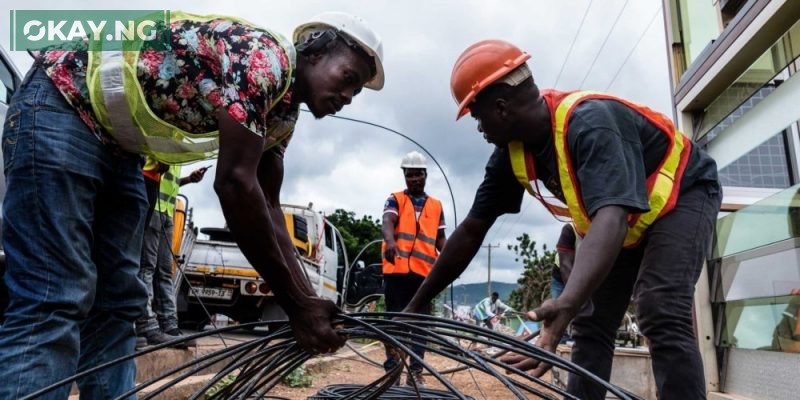
The report underscores that while internet adoption in Africa is on an upward trajectory, millions remain excluded from the digital realm due to a confluence of factors. Cripplingly high service costs, pervasive digital illiteracy, and a glaring lack of reliable infrastructure, particularly in underserved rural communities, are cited as major impediments.
“The figures are a stark reminder of the inequalities that persist in our increasingly digital world,” notes a lead researcher from the ITU. “While other regions are forging ahead, a significant portion of Africa’s population is being left behind, limiting their access to vital information, education, and economic opportunities.”
Affordability
The ITU report pinpoints affordability as a critical bottleneck in bridging the digital gap. In 2024, the median price for a basic mobile broadband plan (2GB monthly) hovered at 4.2% of the Gross National Income (GNI) per capita. This figure, while showing a slight decrease from 4.6% in 2023, remains more than double the United Nations Broadband Commission’s affordability target of two per cent – making it the highest across all ITU regions.
The situation is even more precarious for fixed broadband, with a median cost equivalent to a staggering 15% of the GNI per capita. This exorbitant pricing places fixed internet connectivity far beyond the reach of the majority of African households, exacerbating digital inequality, especially among low-income populations.
Mobile Dominance Masks Underlying Disparities
Mobile networks continue to serve as the primary gateway to the internet for many Africans. As of 2024, mobile broadband coverage extended to 86% of the population. However, this seemingly positive statistic masks the reality that 14% remain entirely unserved, with this figure escalating to a concerning 25% in rural areas.
Furthermore, while 70% of the population has access to faster 4G networks, a significant 16% still rely on outdated 3G technology, which offers slower speeds and a diminished digital experience. The rollout of next-generation 5G technology remains in its infancy, reaching a mere 11% of the population, predominantly concentrated in select urban centers.
Read Also: 60% of Nigerians with 4G Coverage Remain Offline
The Stark Urban-Rural Divide
The ITU report starkly illustrates the geographical dimension of the digital divide. Africa’s digital advancement is largely being propelled by young, urban populations, leaving older adults and those residing in rural areas increasingly marginalized.
In 2024, internet usage in urban areas reached a notable 57%, compared to a meager 23% in rural regions – the most significant urban-rural disparity observed across all ITU regions. This chasm is further widened by unequal infrastructure investment, with the deployment of advanced 4G and nascent 5G networks heavily favoring urban centers, while rural areas remain tethered to older, less efficient networks.
The ITU urgently calls for targeted policies and strategic infrastructure investments to effectively bridge this digital chasm and ensure equitable access for all.
Policy Progress and Governance Gaps
On the policy front, the report acknowledges that many African nations have made strides in modernizing their Information and Communication Technology (ICT) regulatory frameworks, fostering more competitive and investment-friendly environments.
However, the ITU highlights a significant gap in the level of regulatory advancement. Only 18% of African countries have attained the most advanced level of ICT regulation (G4), falling considerably short of the global average of 38%.
“Robust digital governance is the bedrock upon which successful digital transformation is built,” the ITU cautions, emphasizing the critical need for improved coordination in areas such as digital identity, digital skills development, and cross-sector policy alignment, alongside усиленные efforts in cybersecurity and data protection.
Nigeria’s Connectivity Landscape
Nigeria, a major player in Africa’s mobile connectivity landscape, recorded 138.7 million mobile connections as of December 2024, according to data from the Nigerian Communications Commission. Broadband penetration in the country stood at 44.43% during the same period. However, a significant portion of the country’s connectivity (42%) still relies on 2G technology, while 5G connections account for a mere 2.4%, mirroring the broader continental trend of uneven technological adoption.
The ITU’s report serves as a critical call to action for African governments, policymakers, and stakeholders to prioritize inclusive digital strategies that address the multifaceted challenges of affordability, infrastructure development, and digital literacy. Bridging this digital divide is not merely a technological imperative but a fundamental step towards unlocking the full potential of the African continent and ensuring a more equitable and prosperous future for all its citizens.