


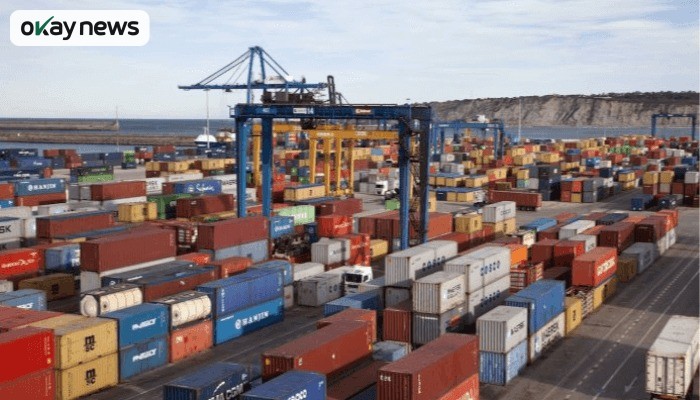
Lagos, Nigeria – The federal government’s plan to invest £746 million (approximately $925 million) to modernize Apapa and Tin Can Island ports has reignited debates over Nigeria’s port strategy.
The funding, provided under the UK Export Finance Buyer Credit Facility and coordinated by Citibank, will support infrastructure upgrades and improvements in operational efficiency.
Okay News reports that stakeholders are divided on whether upgrading these congested ports is the best approach or if newer facilities like Lekki Deep Seaport could better support Nigeria’s long-term trade growth. The rehabilitation aims to reduce vessel turnaround times, cut cargo dwell times, and modernize port operations through automation.
Tonami Playman, an independent transport researcher, argued that Nigeria should relocate major port operations to Lekki Deep Seaport to relieve congestion at Apapa and Tin Can. He stated that continued investment in near-capacity ports is inefficient and that money should be directed to relocating all port activities to Lekki.
Abayomi Duyile, Chairman of the Apapa chapter of the National Council of Managing Directors of Licensed Customs Agents, countered that relocating a federally owned port to a private facility like Lekki is not feasible. He stressed that infrastructure upgrades at existing ports are long overdue, emphasizing the need to fix access roads and provide necessary equipment for terminal operators.
The rehabilitation is expected to reduce vessel turnaround times, cut cargo dwell times closer to global best practices of 3 to 5 days, and streamline operations through automation. The project will involve rebuilding quays and jetties, expanding container storage capacity, installing modern cargo handling equipment, and upgrading port access roads.
Stakeholders say cargo clearance at Apapa and Tin Can Island ports continues to face structural delays. Trucks face delays at multiple points, including terminal loading and discharge, while congested yards and manual documentation slow container movement. Cargo dwell time averages 18 days, caused by bureaucracy, poor agency coordination, multiple inspections, and weak infrastructure.
Experts say the rehabilitation must go beyond physical upgrades to improve efficiency. Recommendations include full automation, a functional single-window system, 24-hour port operations, and stronger coordination among government agencies. Without addressing underlying inefficiencies, the benefits of this port rehabilitation may remain limited.
The 2025 Operational Performance Report of the Nigerian Ports Authority shows total cargo throughput rose 24.8 percent to 129.3 million metric tonnes. Lekki Deep Sea Port handled the largest share at 40.6 percent, while Apapa managed 16.7 percent. This port rehabilitation effort aims to boost Nigeria’s trade competitiveness and reduce logistics costs.


 to modernize Apapa and Tin Can Island ports has reignited debates over Nigeria's port strategy.)