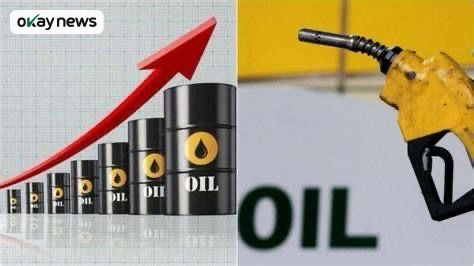
The price of Brent crude oil, the international benchmark, surged above $70 per barrel on Thursday for the first time since September, driven by heightened geopolitical tensions. The increase followed a social media post by United States President Donald Trump threatening military strikes against Iran, raising fears of a disruption to global oil supplies from a key producing region.
In morning trading in London, the Brent North Sea crude contract jumped 2.4 per cent to $70.06 a barrel. The US benchmark, West Texas Intermediate (WTI), also climbed 2.6 per cent to $64.82 per barrel. The price spike reflects immediate market anxieties over a potential conflict that could threaten the flow of oil through the Middle East, a region critical to global energy security.
Okay News reports that President Trump issued the warning on his Truth Social network, directly addressing Iran’s nuclear programme. “Hopefully Iran will quickly ‘Come to the Table’ and negotiate a fair and equitable deal — NO NUCLEAR WEAPONS,” he wrote, adding, “The next attack will be far worse! Don’t make that happen again.” This referred to previous American strikes against Iranian nuclear targets in June.
Global Risk To Vital Supply Choke Point
Analysts immediately highlighted the significant risk to worldwide oil flows. Derren Nathan, head of equity research at Hargreaves Lansdown, stated that a conflict could impact Iran’s daily oil production of three million barrels and, more critically, disrupt tanker traffic through the Strait of Hormuz. This narrow sea passage between Iran and Oman is a pivotal global transit hub, through which about 21% of global seaborne oil and a major share of liquefied natural gas passes.
“Brent crude oil is now at the highest level seen in four months as the war of words… ratchets up,” Nathan said. The market reaction underscores the acute sensitivity of global oil prices to geopolitical shocks in the Middle East, a phenomenon that affects fuel costs and economic planning in importing nations worldwide, from the Americas to Europe and Asia.
Reintroducing A Geopolitical Risk Premium
Iran’s Foreign Minister, Abbas Araghchi, responded by warning that Tehran would respond immediately and forcefully to any US military operation. This exchange has reintroduced a significant “geopolitical risk premium” into oil prices, which had been trading within a lower range in recent months due to balanced supply and demand fundamentals.
The situation remains fluid, with traders and governments worldwide closely monitoring any developments that could affect supply from Iran, a member of the Organization of the Petroleum Exporting Countries (OPEC). The sharp price movement demonstrates how political rhetoric from world leaders can swiftly translate into volatility in global commodity markets, impacting inflation, trade balances, and consumer costs in economies across the globe.