


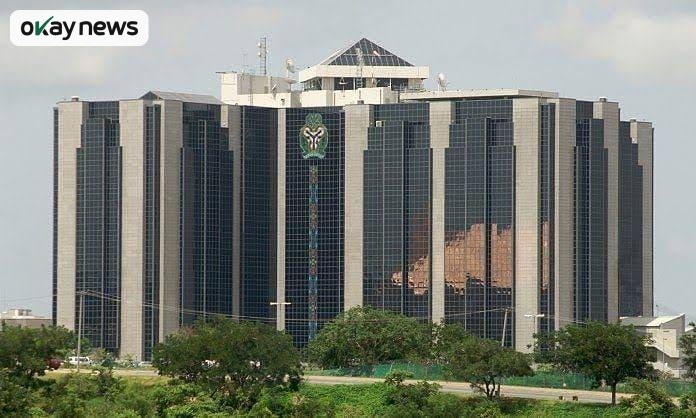
Abuja, Nigeria – The Central Bank of Nigeria (CBN) has withdrawn N4.11 trillion from the banking system in a single week through two Open Market Operations (OMO) sales on March 23 and 27, 2026. The move is part of a broader tightening drive aimed at curbing inflation, even as economists warn it could blunt Nigeria’s longer‑term growth ambitions.
Okay News reports that the apex‑bank data shows the CBN sterilised N2.357 trillion on March 23 and another N1.753 trillion on March 27, with other injections of about N2.985 trillion partially offsetting the drain. The net result is a withdrawal of roughly N1.125 trillion, while banks still parked over N7 trillion at the Standing Deposit Facility (SDF) at about 22.28% overnight interest during the week.
The CBN has relied heavily on OMO auctions, Treasury‑bill issuances, and the SDF to mop up excess liquidity this year. In January alone, the bank pulled more than N13.41 trillion from the system, yet overall liquidity continues to hover above N8 trillion. Maturing securities and inflows keep replenishing the market, forcing the central bank into repeated, large‑scale operations to keep yields and inflation in check.
Analysts say the real challenge is not just liquidity levels but how those funds are used. They argue that in a growing economy, higher money supply should be channelled into infrastructure, manufacturing, and agro‑processing rather than speculative activities. Olubunmi Ayokunle of Augusto & Co notes that inflation risk comes when liquidity outpaces productive output, while Blakey Ijezie of Okwudili Ijezie & Co warns that sterilising too hard may strangle the credit that businesses need to grow.
Ijezie questioned the logic of aggressive tightening when the government aims to expand the economy, saying further cuts in the Monetary Policy Rate could ease borrowing costs and support production. Both experts urge a more balanced approach that links monetary policy to productivity so that liquidity fuels growth instead of speculation.
The debate comes against Nigeria’s stated goal of becoming a N1 trillion economy by 2030 under President Bola Tinubu. While the CBN’s tightening has helped contain inflation, prolonged sterilisation could discourage private borrowing and slow industrial expansion. Economists insist that for Nigeria to reach its target it must walk a fine line between price stability and growth‑supportive liquidity.

 has withdrawn N4.11 trillion from the banking system in a single week through two Open Market Operations (OMO) sales on March 23 and 27, 2026.)