
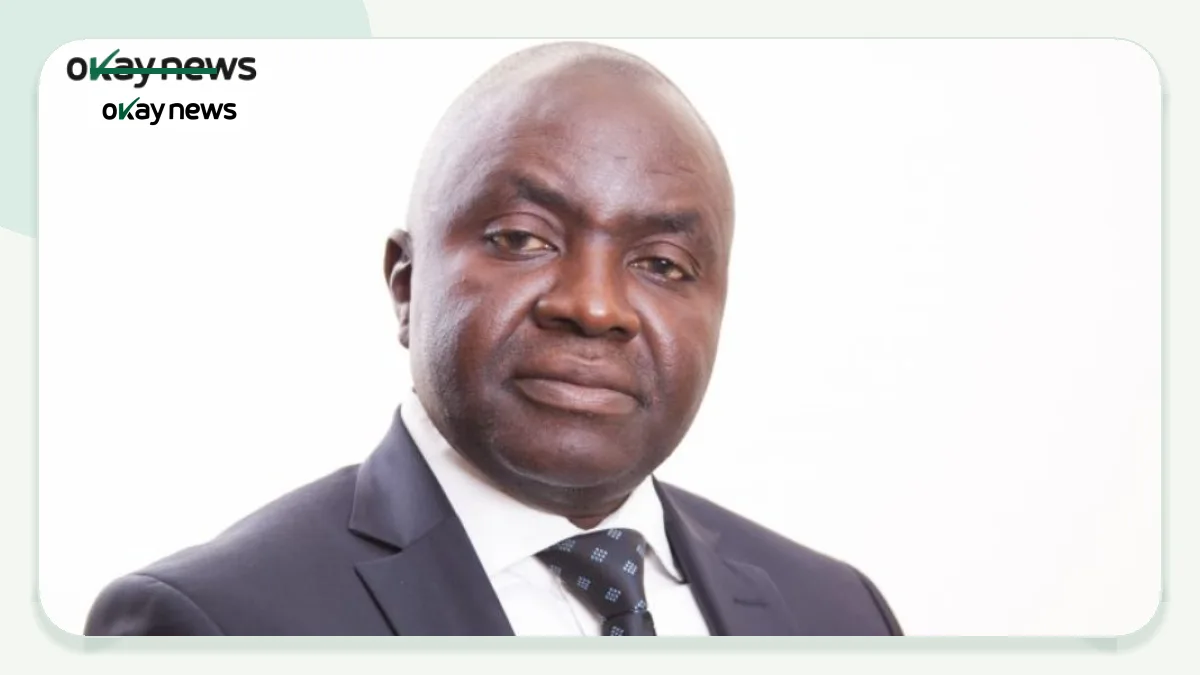
LAGOS, Nigeria — The Centre for the Promotion of Private Enterprise (CPPE) has warned against prolonged monetary tightening and Nigeria’s growing dependence on foreign portfolio inflows, saying both could undermine long-term economic growth despite recent improvements in macroeconomic stability.
Okay News reports that the position was contained in a statement issued on Sunday, June 15, 2026, by CPPE Chief Executive Officer Dr. Muda Yusuf, in reaction to the International Monetary Fund’s (IMF) latest Article IV Consultation report on Nigeria.
“Capital in the form of Foreign Portfolio Investments (FPI, also known as hot money) is gravitating towards financial assets rather than productive assets. Hot money can stabilize an economy temporarily; productive investment is what transforms it permanently. The challenge before policymakers is no longer merely one of economic stabilisation; it is increasingly one of inclusive prosperity,” Yusuf said.
CPPE said the IMF’s assessment correctly reflects progress made in restoring macroeconomic stability but argued that greater policy balance is needed to ensure sustainable economic growth. The organisation expressed concern over the IMF’s continued support for tight monetary conditions, noting that the current interest-rate environment is becoming increasingly restrictive for businesses and productive investment.
CPPE also warned that prolonged high interest rates are increasing the cost of domestic borrowing and worsening debt-service obligations, with a growing share of government revenue being consumed by debt servicing, limiting fiscal space for investments in infrastructure, healthcare, and education.
The organisation defended the continued use of development finance interventions, arguing that strategic sectors such as agriculture, manufacturing, housing, and infrastructure cannot rely solely on commercial lending channels. It stated that Nigeria’s structural financing gaps make development finance a necessity rather than a policy distortion.
CPPE welcomed recent indications by the Federal Government that it plans to refinance portions of its debt portfolio to reduce borrowing costs and improve fiscal sustainability.
The organisation acknowledged significant progress in restoring macroeconomic stability, pointing to improved foreign reserves, recovering capital inflows, stronger corporate earnings, and increased policy credibility as evidence that recent reforms are yielding positive results. However, it stressed that economic reforms should ultimately be measured by their impact on citizens’ welfare rather than improvements in macroeconomic indicators alone.
CPPE agreed with the IMF’s concerns over persistent poverty and food insecurity, noting that exchange-rate stability, reserve accumulation, and fiscal consolidation would mean little if they do not translate into lower food prices, higher incomes, better jobs, and improved living standards.
Nigeria’s Monetary Policy Rate (MPR) underwent an unprecedented tightening cycle under Central Bank of Nigeria Governor Olayemi Cardoso, with the benchmark rate raised six consecutive times in 2024, climbing from 18.75% to 27.50% by November 2024. The CBN shifted to a pause in 2025 before beginning an easing cycle in September 2025, cutting the rate to 27.00%. A further reduction in February 2026 brought the MPR to 26.50%, its lowest level since May 2024.