
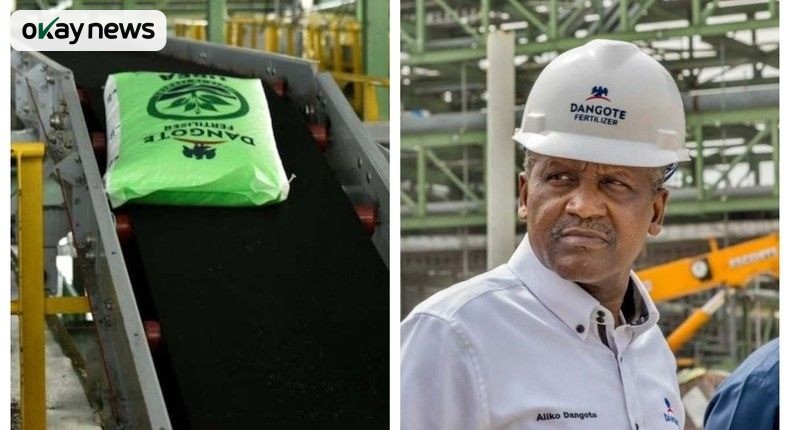
Lagos, Nigeria – Dangote Fertilizer Ltd. has seen a sharp increase in global demand as the ongoing United States-Israel-Iran war disrupts fertilizer supplies worldwide. The development positions Africa’s largest producer of granulated urea and ammonia to capitalize on shifting market dynamics.
Okay News reports that Vice President Devakumar Edwin disclosed the surge during a call with Bloomberg on Monday. The increase in demand reflects global shortages, with buyers turning to Dangote’s Lagos-based facility as alternative sources dry up.
Edwin explained that the demand increase is directly linked to disruption of global fertilizer supplies caused by the war. Buyers are increasingly seeking alternatives as Iran’s production slows and natural gas prices rise.
About a third of global fertilizer supplies pass through the Strait of Hormuz, a key maritime passage that has been restricted due to the conflict. This bottleneck has heightened supply chain risks and prompted global buyers to seek alternative sources.
Dangote’s Lagos facility has an annual production capacity of 3 million tons of urea and ammonia. Approximately 37% of output is currently exported to the United States.
Owner Aliko Dangote has stated the company aims to surpass Qatar as the world’s largest urea exporter within the next four years. The current global demand surge highlights how geopolitical tensions can rapidly reshape commodity markets.
The United States-Israel-Iran conflict began on February 28, 2026, after Israel and the United States launched attacks on Iranian targets. Iran responded with retaliatory strikes on Israel and neighboring Gulf countries hosting United States bases.
Shipping through the Strait of Hormuz has slowed significantly. Marine insurers have withdrawn war risk coverage for vessels in the region. Major insurers including Gard, Skuld, NorthStandard, London P&I Club, and American Club cancelled coverage for ships operating in affected waters.
The United States Navy signaled readiness to escort vessels through the strait to safeguard energy supplies. Iran denies fully shutting down shipping, but restrictions remain in place. These developments have caused disruptions in both energy and fertilizer supply chains.
Dangote Fertilizer entered a strategic agreement with Thyssenkrupp Uhde Fertilizer Technology in December 2025. The deal licenses UFT Fluid Bed Granulation Technology for four new urea granulation units in Nigeria.
Each unit will have a nameplate capacity of 4,235 metric tons per day, totaling 16,940 metric tons daily. This expansion increases annual urea granule production from roughly 2.65 million tons to over 8 million tons.
The new facilities will integrate energy-efficient scrubbing systems and Ammonia Convert Technology to minimize emissions and eliminate waste streams. Existing UFT technology units at Dangote produce 3,850 metric tons per day each, operating since 2021.
Nadja Haakansson, Chief Executive Officer of Thyssenkrupp Uhde Fertilizer Technology, said the partnership demonstrates shared commitment to sustainable industrial development and global food security. Aliko Dangote added that the expansion reflects Nigeria’s growing role as a leading fertilizer producer while supporting agricultural self-sufficiency in Africa.
In a related development, Dangote signed a $2.5 billion deal with the Ethiopian government in August 2025 to build a fertilizer plant in Ethiopia’s Somali region. Dangote will own 60% with Ethiopian Investment Holdings holding 40%.