


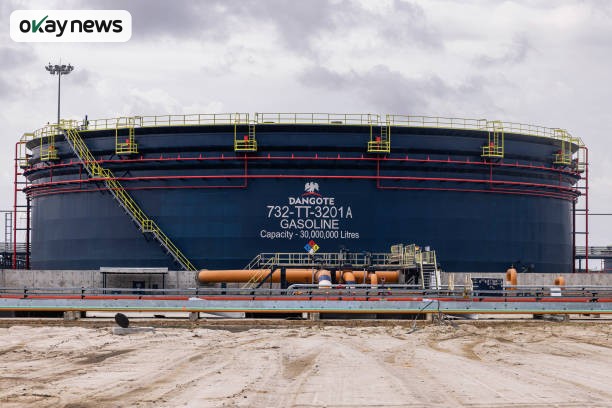
Lagos, Nigeria – The Nigerian National Petroleum Company Limited (NNPC) is increasing crude oil supply to Dangote Petroleum Refinery as petrol prices crossed the N1,000 threshold nationwide.
The move aims to stabilize domestic fuel supply amid volatile global markets and escalating Middle East conflict.
Okay News reports that Dangote Refinery suspended Premium Motor Spirit loading over the weekend of March 7-8. The suspension reflected logistical challenges in maintaining domestic supply as global crude prices surged.
The refinery requires approximately 13 to 14 cargoes of crude per month to operate at full capacity. Nigerian National Petroleum Company has been supplying about 5 cargoes monthly at best, creating a significant shortfall.
To cope with this deficit, Africa’s largest refinery must purchase crude from foreign traders. These traders charge premiums due to inflated global prices driven by current geopolitical tensions.
The Federal Government secured crude oil supply for Dangote Refinery via third-party international traders. This intervention aims to sustain local refining operations in West Africa’s largest economy.
However, officials warned that Nigerian consumers might not immediately notice lower fuel prices. Recent price hikes at the Lekki refinery have already burdened the average consumer.
Dangote Refinery claimed to absorb approximately 20% of the price increase to soften the blow. However, 80% is being passed to marketers and consequently to end users.
These price adjustments stem from global gains following the United States-Israeli-Iran conflict. Brent Crude prices have remained around $115 per barrel. Crude imports were made at replacement costs due to high global prices.
The refinery delayed loading to avoid selling at a loss before prices rise again. This marks the third price spike in one week, with some stations selling gasoline at roughly N1,200 per liter.
Retail prices in several Nigerian states now exceed N1,100 per liter. This follows price increases from N774 to N995 per liter at the refinery gate, deepening financial strain on the Nigerian populace.
Oil prices in Asia surged by 30% for the first time since 2022. West Texas Intermediate and Brent crude increased by 30% and 25% respectively, with prices reaching 119 and117 per barrel.
Escalating conflicts in Israel and Iran, particularly attacks on refineries in Alborz and Tehran, have marked the first airstrike conflicts in recent history. The conflict has now reached its tenth day.
Iran was the first to strike, targeting shipping routes in the Strait of Hormuz. This vital corridor handles 20% of global oil transit and has been affected by shortages. These disruptions have raised significant concerns in oil markets.
Major producers are reducing output as storage fills up due to the conflict and closure of key energy trade routes. The Group of Seven finance ministers plan to discuss a potential joint release of oil reserves coordinated with the International Energy Agency.
The fallout from recent United States and Israeli strikes on Iran has heightened fears of inflation. Crude and natural gas prices continue climbing as attacks on energy infrastructure and the closure of the Strait of Hormuz threaten global supply.


 is increasing crude oil supply to Dangote Petroleum Refinery as petrol prices crossed the N1,000 threshold nationwide. )