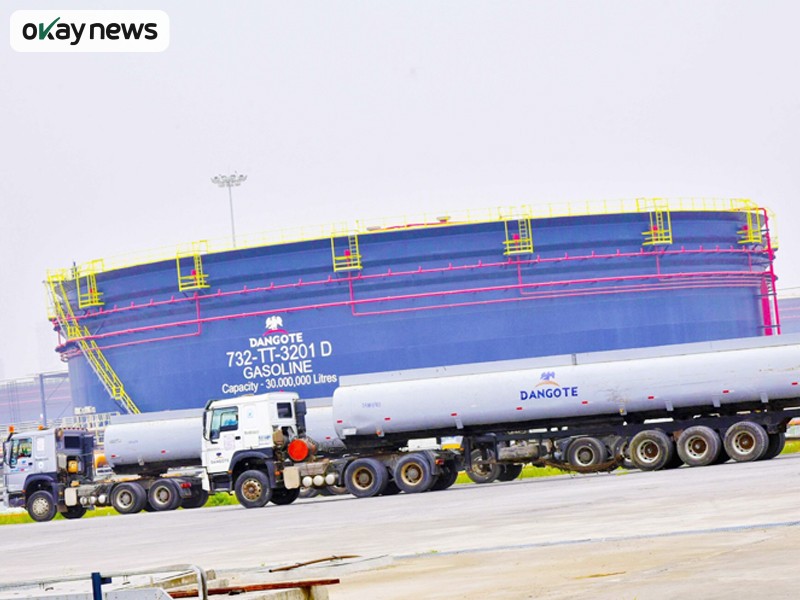
Lagos, Nigeria – Dangote Petroleum Refinery aims to increase its crude oil refining capacity to 700,000 barrels per day. Chief Executive Officer David Bird disclosed this target during an interview with journalists in Lagos on Monday.
Okay News reports that the refinery currently operates at 650,000 barrels per day. Bird stated that the facility actually achieved 661,000 barrels per day during a performance test run.
To reach 700,000 barrels per day, the refinery must first assure insurance and market stakeholders. However, management is confident in achieving this target through deliberate operational management.
For full transparency, Bird confirmed the refinery is currently operating at its nameplate capacity of 650,000 barrels per day.
The refinery is expected to receive additional crude supply from the Nigerian National Petroleum Company Limited amid global oil volatility. The Federal Government secured crude oil supply for Dangote via third-party international traders to sustain local refining operations.
However, officials warned that Nigerian consumers might not immediately notice lower fuel prices, especially given recent price hikes at the Lekki facility.
Dangote Refinery requires approximately 13 to 14 cargoes of crude per month to operate at full capacity. The national oil company has been supplying about five cargoes monthly at best, forcing the refinery to purchase from foreign traders to cover the shortfall.
Foreign traders charge premiums due to inflated global prices driven by current tensions. The refinery absorbs approximately 20% of price increases to soften the blow, but passes 80% to marketers and ultimately to end users.
These adjustments stem from the United States-Israeli-Iran conflict, which has kept Brent Crude prices around $115 per barrel. Crude imports are made at replacement costs due to high global prices, and the refinery delays loading to avoid selling at a loss before prices rise again.
Owned by African industrialist Aliko Dangote, the refinery is considered transformative for Nigeria’s energy sector. Last year, the facility stated it does not compete with the national oil company, as both play complementary roles in Nigeria’s energy environment.
The refinery was designed to reduce reliance on imported refined petroleum products while strengthening domestic fuel supply. It is now a central player in Nigeria’s downstream sector, capable of meeting the country’s fuel demand independently of international supply shocks.