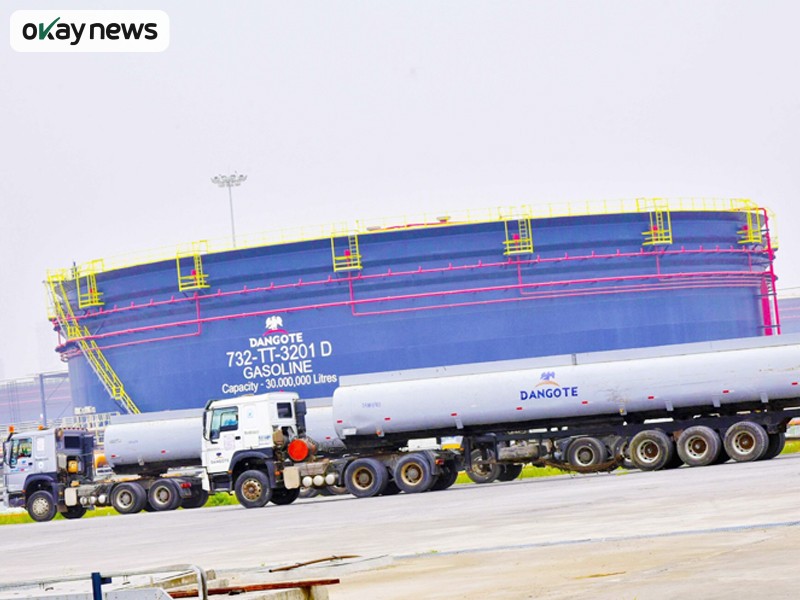
Lagos, Nigeria – The Dangote Petroleum Refinery has agreed an offtake agreement with 12 major and independent oil marketers to distribute between 60 and 65 million litres of petrol daily across the country, in what industry observers describe as a landmark downstream sector arrangement.
Okay News reports that the move is expected to stabilise supply and deepen Nigeria’s fuel self-sufficiency, with the structured framework guaranteeing nationwide availability while allowing for exports of surplus volumes. Aliko Dangote, Chairman of Dangote Group, disclosed that any surplus, estimated at between 15 and 20 million litres, will be exported. Nigeria’s current daily petrol consumption ranges between 50 and 60 million litres, meaning the refinery’s output now exceeds domestic demand, marking a major shift from decades of reliance on imported refined products.
Under a revised distribution framework endorsed by the Nigerian Midstream and Downstream Petroleum Regulatory Authority, the refinery will channel supply nationwide through major marketers including MRS Oil Nigeria Plc, Nigerian National Petroleum Company Limited retail arm, 11 Plc, TotalEnergies Marketing Nigeria Plc, Rainoil Limited, Northwest Petroleum and Gas Company Limited, Ardova Plc, Bovas and Company Limited, AA Rano Nigeria Limited, AYM Shafa Limited, Conoil Plc, and Masters Energy Oil and Gas Limited. The structured model is designed to eliminate supply bottlenecks and curb speculative practices that have historically triggered fuel shortages.
Industry analysts describe the development as a structural shift in Nigeria’s downstream petroleum value chain. For decades, Africa’s largest crude oil producer depended heavily on imported refined products, exposing the economy to foreign exchange volatility, logistics disruptions, and recurring fuel scarcity. With local refining now exceeding national demand, Nigeria could conserve billions of dollars annually in foreign exchange previously spent on petrol imports, easing pressure on the naira and strengthening external reserves.
The new deal follows an earlier agreement in October 2025 under which 20 depot owners were to collectively lift about 600 million litres of petrol monthly from the refinery. In December 2025, the refinery confirmed readiness to take full responsibility for Nigeria’s domestic petrol supply, pledging to deliver 1.5 billion litres monthly, with supply later rising to 1.7 billion litres per month from February 2026. If sustained, the initiative could mark the most significant transformation in Nigeria’s fuel supply system in decades. This structured domestic supply framework represents a fundamental shift in how Nigeria manages its fuel distribution, with the refinery now positioned as the primary source of domestic supply.