The Depot and Petroleum Products Marketers Association of Nigeria (DAPPMAN) has appealed to the Dangote Petroleum Refinery to ensure its fuel products are sold at accessible and reasonable rates to marketers nationwide.
Speaking on Channels Television’s programme The Morning Brief on Wednesday, the association’s spokesperson, Ikem Ohia, stressed that collaboration between marketers and the refinery would eliminate fuel queues and guarantee stable supply.
According to him, there is no conflict between the refinery and marketers. Instead, their focus remains on transparent structures that ensure regular distribution.
“Our key interest is to have petroleum products offered at reasonable prices consistently, in a way that there’s no stock-out and Nigerians no longer queue for fuel,” Ohia explained.
While acknowledging Dangote Refinery as a dominant player, he questioned issues around accessibility and pricing.
“The question is: at what price does he offer us, and do we actually have access to purchase these products from him?” he asked.
Ohia highlighted that for more than 20 years, DAPPMAN has invested in a reliable distribution network with depots in Lagos, Port Harcourt, Calabar, and Warri. He urged the refinery to utilise these depots to meet the nation’s demand.
“What we are asking Dangote to do is to use these depots that are already in existence for us to meet the demands of Nigerians,” he added.
He dismissed speculations that marketers were seeking subsidies.
“We are businessmen; he is a businessman. We’re not asking for subsidies. We went into negotiations and are still negotiating to see how he can bridge the gap,” he clarified.
On global best practices, Ohia pointed out that most refineries rely on bulk offtakers who lift products in large quantities to sustain continuous production, warning that retail gantry sales alone cannot satisfy Nigeria’s needs.
Although marketers had approached Dangote before the refinery commenced production, he noted that no firm agreement was reached.
“Instead, he prefers to work with a few selected partners, which includes one or two of our members. We believe an open system, not a controlled one, will help the country,” Ohia stated.
The association also noted that many of its members operate filling stations—some with as many as 300 outlets—but restricted supply has hindered their ability to serve Nigerians.
“Figures don’t lie; whatever is supplied now doesn’t meet full market needs. Bulk deliveries to depots are necessary if we must serve Nigerians effectively,” he said.
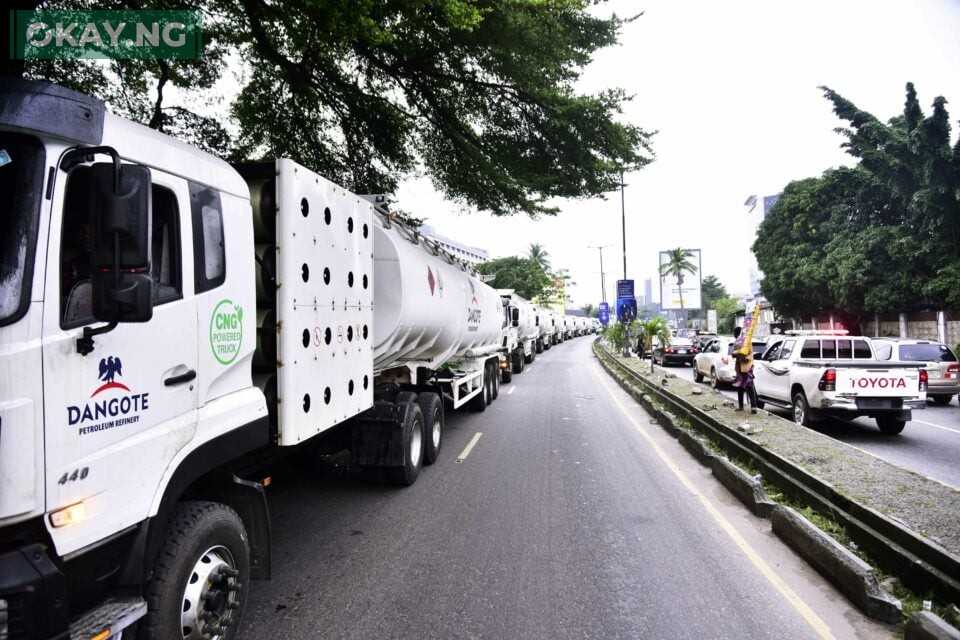
Meanwhile, Dangote recently launched 4,000 Compressed Natural Gas (CNG)-powered trucks for nationwide distribution. Marketers fear this move could give the refinery excessive control of the downstream sector.
On his part, billionaire investor Femi Otedola urged DAPPMAN to adapt to emerging realities, suggesting they explore restructuring or consider investing in the Port Harcourt Refinery rather than opposing Dangote’s model.
Similarly, the President of the Petroleum Products Retail Outlets Owners Association of Nigeria (PETROAN), Billy Gilly-Harris, said Dangote’s 4,000 trucks were insufficient for effective distribution across the nation.
However, the refinery in a statement refuted claims by DAPPMAN that it had benefitted from a ₦1.5 trillion subsidy, describing such allegations as “false and unfounded.” It maintained that its products are priced based on production costs and regulated margins, stressing that marketers must bear their logistics costs.
The refinery reiterated that subsidy on petroleum products was abolished by the Federal Government in May 2023, leaving players to operate strictly within deregulated market conditions.
okaynews.com reports that the ongoing debate reflects a tug of war between ensuring accessibility for marketers and maintaining business realities for the refinery, with millions of Nigerians caught in the middle as fuel distribution remains a national challenge.