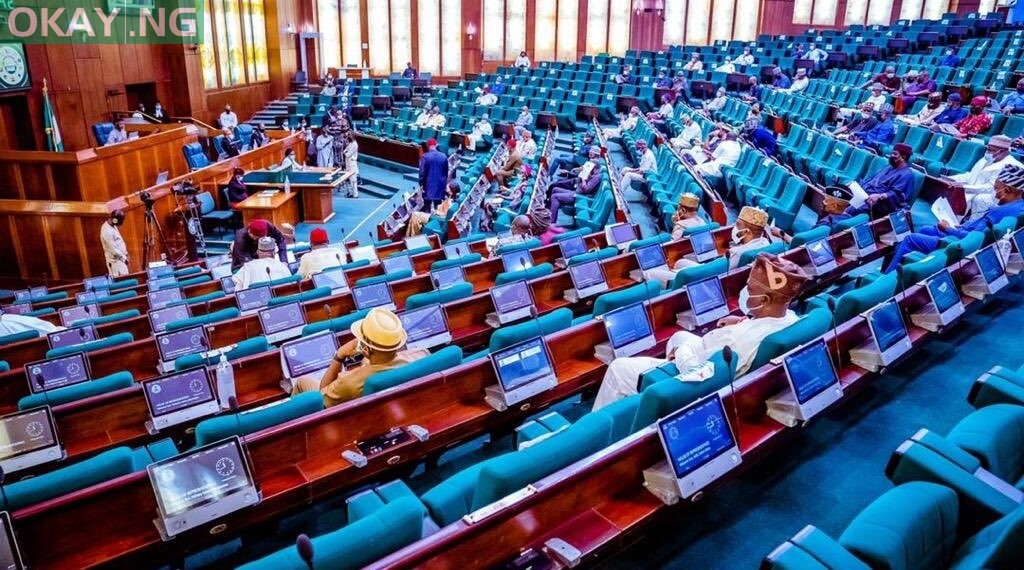
The House of Representatives has reignited a contentious legal debate, passing for a second reading a bill proposing the establishment of Ecclesiastical Courts of Appeal. Sponsored by Francis Waive, representing Ughelli Udu, the bill seeks to amend the Constitution of the Federal Republic of Nigeria to create specialized courts for adjudicating matters of Christian personal law and ecclesiastical issues.
The proposed legislation, officially titled “A Bill for an Act to Alter the Constitution of the Federal Republic of Nigeria, Laws of the Federation of Nigeria, 2024 to Provide for the Establishment of the Ecclesiastical Court of Appeal of the Federal Capital Territory Abuja and the Ecclesiastical Court of Appeal of the States; and for Related Matters,” aims to provide a parallel judicial system for Christians, similar in concept to the existing Sharia courts for Muslims.
“The bill… seeks to give the Ecclesiastical Court the compliment of the regular courts in adjudging in matters relating to the tenets of the Christian faith between individuals and groups that yield and submit to its jurisdiction,” stated a summary of the bill’s objectives.
This is not the first time such a proposal has surfaced. A similar bill was introduced in 2016, also aiming to amend Cap C23 of the Laws of the Federation of Nigeria, 2004, but it stalled at the second reading. This resurgence of the bill indicates a renewed push to integrate religious legal systems into the nation’s framework.
From my perspective, as someone observing this development, the bill raises fundamental questions about the nature of Nigeria’s secularity and the balance between religious freedom and legal uniformity. While proponents argue it would provide a much-needed avenue for Christians to resolve disputes within their faith’s framework, critics express concerns about potential fragmentation of the legal system and the implications for national unity.
Individuals who feel their legal needs are not adequately addressed by the current system may find solace in specialized courts. However, the potential for unequal application of law, depending on religious affiliation, could lead to societal divisions.
The debate extends beyond legal technicalities. It taps into the deep-seated religious identities of Nigerians, where faith plays a significant role in daily life. The bill’s passage, therefore, could have far-reaching social and political implications.
To provide context, Nigeria’s existing legal system already accommodates religious laws to some extent. Sharia courts, for example, function in several northern states, handling civil matters involving Muslims. However, expanding this model to include Christian courts raises complex questions about how to maintain a cohesive national legal structure.
As we move forward, it’s crucial to examine the potential impacts on Nigeria’s legal landscape. We must ask: how will these courts interact with existing state and federal courts? What safeguards will be in place to ensure fairness and prevent discrimination? And, crucially, how will this development affect the perception of Nigeria’s commitment to secularity?
The House of Representatives’ decision to advance this bill sets the stage for a critical national conversation about the role of religion in law and the delicate balance required to maintain a just and equitable society for all Nigerians.