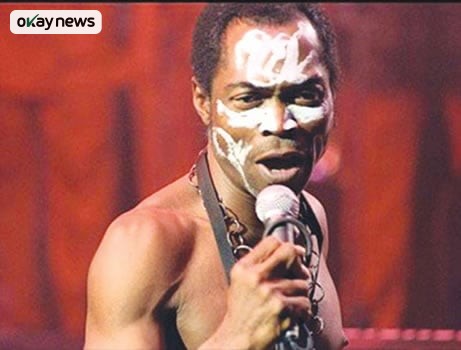
Legendary Nigerian musician and Afrobeat pioneer, Fela Anikulapo Kuti, has been named the first African ever to receive the Grammy Lifetime Achievement Award. The honour will be awarded posthumously at the Grammy Awards 2026 scheduled for Sunday, 1st February 2026. This comes nearly 30 years after his death in 1997.
The recognition places Fela among a select group of global music icons whose contributions have shaped the industry beyond commercial success. This year’s honourees also include internationally celebrated artists such as Carlos Santana, Chaka Khan, and Paul Simon.
Okay News reports that members of Fela Kuti’s family, close associates, and longtime collaborators are expected to attend the Grammy ceremony to receive the award on his behalf. His son, Seun Kuti, described the honour as a long-overdue acknowledgement of his father’s cultural impact, noting that Fela’s influence has always lived in the hearts of the people, even without formal global validation.
Widely regarded as the architect of Afrobeat, Fela Kuti revolutionised African music by blending traditional West African rhythms with jazz, funk, highlife, and politically charged lyrics. Alongside drummer Tony Allen, he developed a sound that was both musically innovative and socially confrontational, using music as a weapon against corruption, military oppression, and social injustice.
Beyond music, Fela was a fearless political activist whose outspokenness often put him at odds with Nigeria’s military governments of the 1970s and 1980s. His Kalakuta Republic commune was infamously raided and destroyed by soldiers in 1977, an attack that led to the eventual death of his mother, Funmilayo Ransome-Kuti. Rather than retreat, Fela turned personal tragedy into protest, releasing songs that openly challenged state power and brutality.
The Grammy recognition also comes amid a broader shift in global appreciation for African music, following the international success of modern Afrobeats. In recent years, the Recording Academy introduced new African-focused categories, reflecting the genre’s growing influence; an evolution many see as rooted in the groundwork laid by Fela decades earlier.
Today, Fela Kuti’s legacy continues to resonate across generations, inspiring artists within Africa and across the diaspora.