Abuja, Nigeria — The Federal Government has directed state governments and the Federal Capital Territory to establish State Councils on Nutrition within the next three months to strengthen nutrition governance across Nigeria.
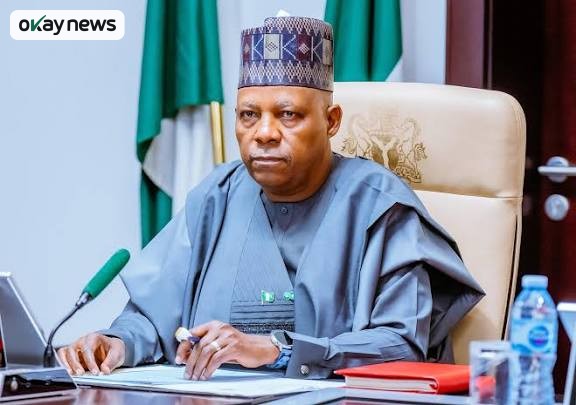
Okay News reports that the directive was issued during the National Council on Nutrition meeting, chaired virtually by Vice President Kashim Shettima, according to a statement released by State House Media on Tuesday.
The move forms part of Nigeria‘s broader strategy to combat malnutrition, improve food security, and ensure coordinated nutrition interventions reach all 774 local government areas nationwide. The decision followed the adoption of the National Policy on Food and Nutrition 2026–2035 by the National Council on Nutrition, with a directive to the Nigeria Governors’ Forum to coordinate the establishment of councils in the remaining 27 states and the FCT, as only nine states currently have such structures.
The Council also ordered all states and the FCT to operationalize State Multisectoral Plans of Action for Food and Nutrition within six to nine months to ensure effective implementation. “The National Council on Nutrition has adopted the National Policy on Food and Nutrition, 2026-2035 and directed the Federal Ministry of Budget and Economic Planning to present the policy to the Federal Executive Council for ratification,” the statement read in part. It added, “Following the adoption of the policy, Council directed the Chairman of the Nigeria Governors’ Forum, working through the NGF secretariat, and in coordination with the Office of the Vice President, to lead the establishment and inauguration of State Councils on Nutrition in the remaining 27 States and the FCT within the next 3 months.”
Vice President Shettima described the new framework as Nigeria‘s most consequential nutrition strategy, emphasizing that it must be evidence-based, grassroots-oriented, and embraced at every level of governance. He stressed that the policy’s success would be measured by tangible improvements in maternal and child health outcomes by 2035.
The Council approved a six-week extension for drafting the National Nutrition Bill, which is expected to be submitted to the National Assembly within eight weeks. Nutrition financing structures were expanded to include the Ministry of Humanitarian Affairs and Poverty Reduction, the Commissioners of Finance Forum, and the Association of Local Governments of Nigeria. A private sector challenge window for nutrition will be launched within 60 days in collaboration with the Dangote Foundation and key ministries. The Nutrition 774 Initiative was highlighted as a key mechanism for delivering interventions effectively across all local government areas.
The National Economic Council launched the Nutrition 774 Initiative in February 2025 as Nigeria‘s first government-led intervention to systematically address malnutrition across all 774 local government areas. The initiative was designed to improve coordination, accountability, and financing while integrating nutrition into broader development goals.
Nigeria continues to face severe nutrition challenges, with over 11 million children under five suffering from stunting and more than half of pregnant women affected by anaemia. The World Bank has emphasized that every dollar invested in nutrition could yield up to $23 in economic returns, making nutrition investment both a health and economic priority. The World Bank approved a $50 million fund in late 2024 under the ANRiN Project 2.0 to support Nigeria‘s nutrition efforts.