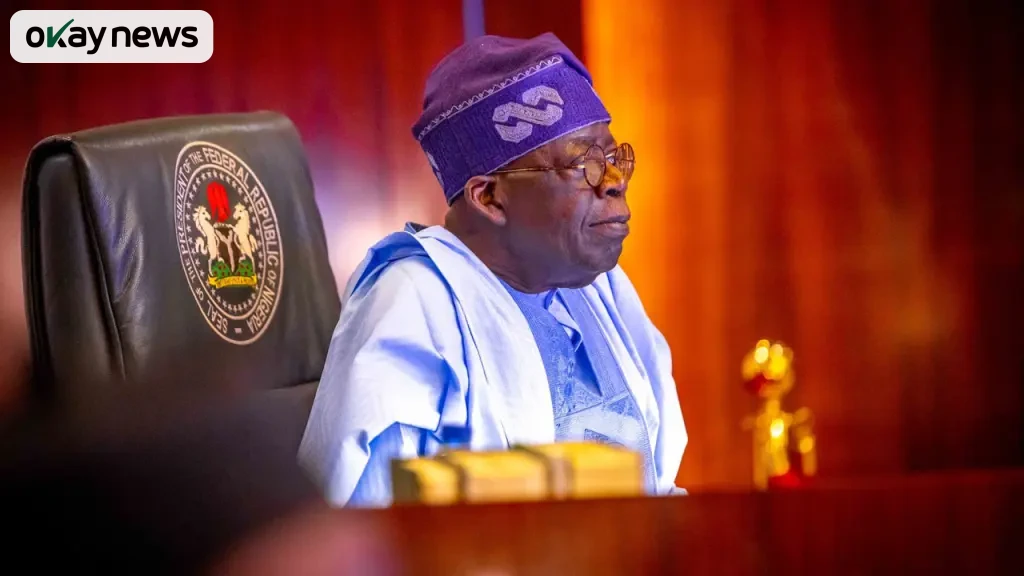
The Federal Government announces a new enforcement drive against Nigerian banks and professional firms implicated in terror financing, warning that executives and institutions involved will face prosecution or shutdown. The directive follows a review of financial-crime intelligence shared between Nigeria and the United States.
The announcement comes through Daniel Bwala, Special Adviser on Media and Public Communication to President Bola Tinubu. Speaking on TVC, he states that the administration has adopted a zero-tolerance stance toward financial channels that enable terrorist operations across West Africa.
Bwala outlines that global counterterrorism systems rely on cutting off financial flows. He says that any Nigerian bank or non-bank financial institution found enabling money laundering, ransom transfers, or covert transactions linked to terrorist groups will face decisive penalties. He emphasizes that terror financing is the operational backbone of insurgent activity across the region.
He warns that if any financial institution facilitates ransom payments or laundering networks, the chief executive will be prosecuted while the institution risks heavy fines or closure. He calls the forthcoming actions a necessary correction to long-standing failures in financial oversight.
He explains that terrorist networks exploit payment channels, shadow accounting layers, and informal negotiators. He states that individuals posing as mediators have, in some cases, become accessories to criminal operations by transmitting funds or intelligence to armed groups.
He adds that Nigerian and United States intelligence coordination will accelerate identification of domestic collaborators. He says that once investigators uncover any link—whether through surveillance, confessions, or foreign intelligence—there will be no exemptions for politically connected or influential individuals.
Bwala stresses that unequal application of the law is a major cause of national insecurity. He argues that societies weaken when some individuals operate above legal consequence. He says the upcoming enforcement phase aims to restore deterrence by demonstrating that national-security offences attract unavoidable punishment.
He confirms that the government has upgraded digital tools to track financial transactions across satellite-based networks, foreign-hosted platforms, and encrypted systems. He notes that new tracing capabilities will allow authorities to penetrate complex financial layers used by domestic and cross-border terrorist networks.
He urges Nigerians to avoid amplifying misinformation, warning that recycled footage and false narratives fuel insecurity. He says citizens have a responsibility to resist content that promotes unrest or legitimizes criminal actors.
He adds that state-level revenue failures also deepen insecurity. He notes that despite increased allocations, some states remain trapped in infrastructure decay and healthcare deficits, undermining public trust and worsening social instability.