

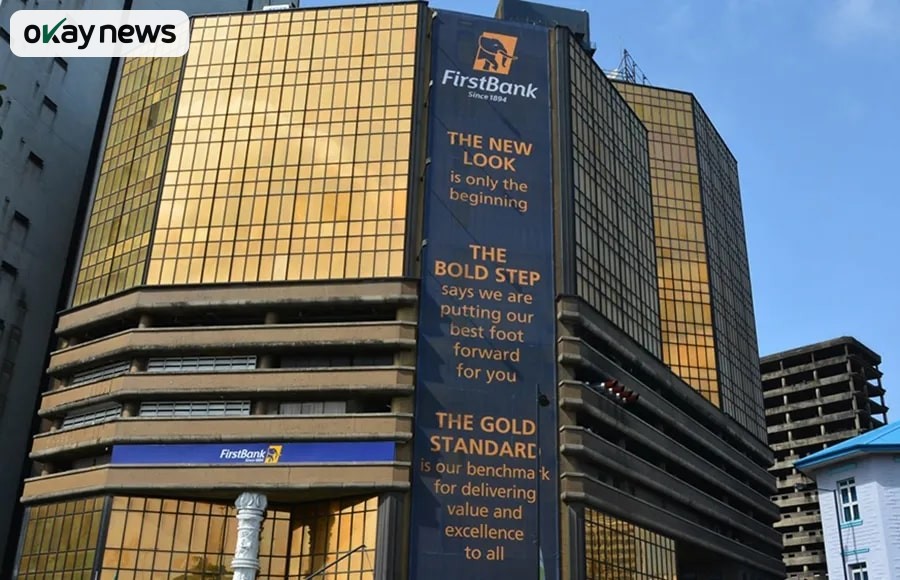
LAGOS, Nigeria — The conversation around Artificial Intelligence (AI) is no longer about the future. That was the clear message delivered to business owners during a FirstBank SME Connect webinar, where speakers urged Small and Medium Enterprises (SMEs) to move from awareness to actual use of AI in their day-to-day operations.
The session, themed “Business Growth: From Adoption to Integration and Scalable Impact,” focused less on theory and more on what business owners can begin doing immediately to improve how they work, serve customers, and grow revenue.
Rather than presenting AI as something complex or out of reach, Temitope Odude, General Manager at Microsoft, broke it down in practical terms. He explained that many SMEs are already dealing with repetitive tasks, delayed decision-making, and poor data use, all of which AI can help fix without requiring heavy investment.
He noted that AI tools can quietly take over routine work, help businesses understand patterns in their operations, and support faster, more informed decisions. More importantly, he stressed that most of these tools are already built for everyday users and do not require technical expertise to get started.
Odude encouraged SMEs to begin small and be intentional. Instead of trying to overhaul everything at once, he advised businesses to identify one or two problem areas, introduce simple AI tools, and monitor results within a short window of seven to fourteen days. According to him, the value becomes clearer when businesses start seeing immediate improvements.
From the banking side, Olufemi Odunmboni, Head of Online Banking and Digital Channels at FirstBank, offered a glimpse into how financial services are already evolving around AI. He disclosed that the bank has built about 19 AI-powered platforms designed to support SMEs across different operational needs.
These platforms, he explained, go beyond basic banking. They handle payments, payroll, and business management while also enabling access to instant loans without collateral. Behind the scenes, transaction patterns and behavioural data are analysed to assess creditworthiness and strengthen security systems.
Okay News reports that this approach reflects a broader shift in how banks are using data to support business growth rather than just provide financial services.
Adding another layer to the discussion, Ibidun Adedewe, Head of SME Acquisitions and Partnerships at FirstBank, revealed the scale of impact already being recorded. She said the bank has disbursed over N1 trillion in digital loans to SMEs, with a significant portion driven by AI-led credit systems.
According to her, N100 billion has gone to traders, while N200 billion has supported other sectors. She explained that AI has made it possible to extend credit faster and more efficiently by relying on real transaction behaviour instead of traditional collateral requirements.
Beyond funding, she highlighted the role of the SME Connect platform as a bridge linking business owners to opportunities, partnerships, and knowledge that can help them scale. She also advised entrepreneurs to bring more structure into their operations by separating personal finances from business accounts, describing it as a simple but critical step toward long-term growth.
On the technology side, Abednego Ugwueke, Head of Digital Channels, pointed out that AI is already working quietly in the background of many financial systems, particularly in fraud detection and customer experience.
He urged SMEs not to overcomplicate their starting point. Simple tools, he said, can already assist with writing business messages, drafting contracts, and improving how businesses communicate with customers.
What stood out from the session was not just the emphasis on AI, but the urgency. The speakers made it clear that businesses that delay adoption risk falling behind in a rapidly changing environment.