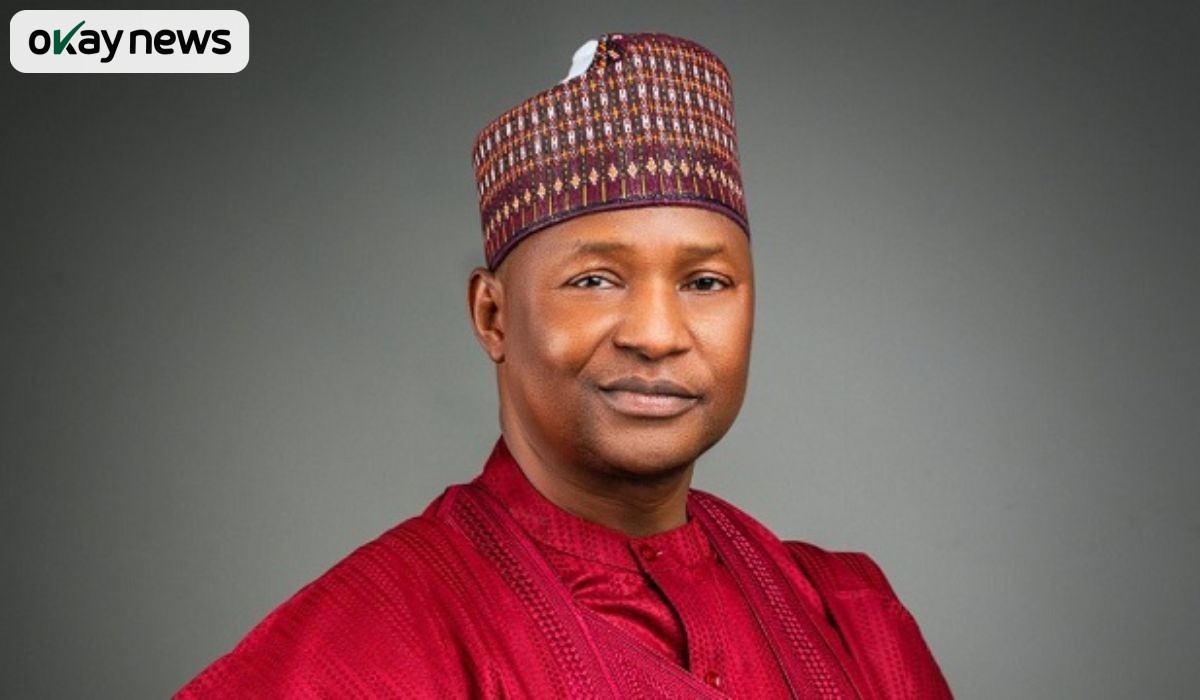
Abuja, Federal Capital Territory, Nigeria – Former Attorney-General of the Federation and Minister of Justice of Nigeria, Abubakar Malami, has declared that he has no regrets about decisions he made while serving in government, following his recent release from custody.
Okay News reports that Malami made the remarks after regaining freedom on bail amid ongoing legal proceedings tied to multiple allegations, including money laundering and terrorism-related offences.
Malami, who served as Nigeria’s chief law officer under the federal government of Nigeria, is currently facing a 16-count charge filed by the Economic and Financial Crimes Commission, the country’s main anti-corruption agency. He is being tried alongside his wife, Bashir Asabe, and his son, Abdulaziz. All three defendants have pleaded not guilty to the charges.
The case has drawn significant public attention in Nigeria, Africa’s most populous country, where anti-corruption enforcement remains a key issue in governance. Malami’s legal troubles escalated earlier this year when he was rearrested on Sunday, January 19, 2026, by operatives of the Department of State Services, Nigeria’s domestic intelligence agency, shortly after he was initially released from Kuje Prison, a major correctional facility located in Abuja.
Two days later, on Tuesday, January 21, 2026, Malami accused the Department of State Services of denying him access to both his family members and his legal representatives during detention.
The legal proceedings continued into late February, when on Thursday, February 27, 2026, a Federal High Court in Abuja granted bail to Malami and his son in the sum of ₦200 million (about $130,000) each over alleged terrorism-related offences. After meeting the bail conditions, the former minister was released.
Speaking in an interview published on Wednesday, March 18, 2026, Malami reflected on his time in detention across multiple agencies, including the Economic and Financial Crimes Commission, Kuje Prison authorities, and the Department of State Services.
“I have spent time in EFCC custody, Kuje Prison, and with the DSS. I believe it is all God’s will, and I accept it, but I will defend myself against the allegations,” he said.
Malami also raised concerns about what he described as violations of his constitutional rights during the investigation process. He alleged that security operatives conducted searches of his homes and business premises without informing him or allowing him to be present.
“They violated my rights by searching my houses and business premises without notifying me during the investigation.
“Constitutionally, I have the right to be present during a search to oversee the investigation of my property and to know exactly what is being looked for or taken.”
Despite the ongoing legal battle and his experience in detention, Malami maintained a firm stance regarding his time in office as Nigeria’s Minister of Justice.
“I have no regrets regarding what I did during my time as a minister,” he concluded.
The case is expected to continue in court, where Malami has pledged to vigorously defend himself against all allegations. The outcome could have wider implications for Nigeria’s anti-corruption efforts and public accountability for former senior government officials.