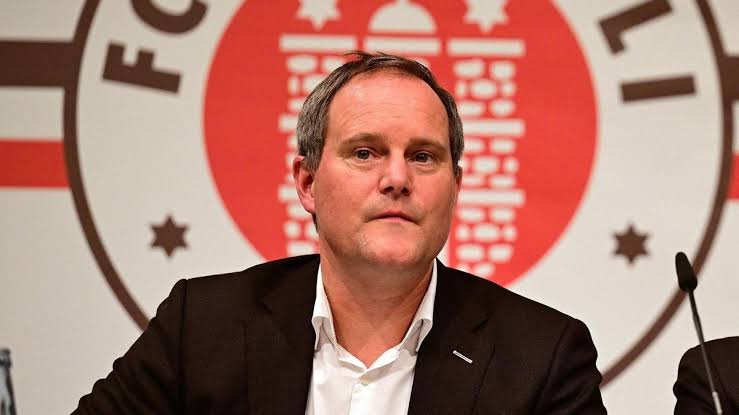
Oke Gottlich, vice-president of the German Football Association (DFB), has publicly suggested that European nations should consider a collective boycott of the upcoming 2026 World Cup. The call for such move comes in response to recent diplomatic friction caused by United States President Donald Trump, specifically his controversial efforts regarding Greenland and trade policies affecting European allies.
Okay News reports that the proposed boycott stems from outrage over President Trump’s recent threats to impose heavy tariffs on eight European nations, including Germany. These threats were initially directed at countries that opposed the American administration’s interest in acquiring Greenland, an autonomous territory under Danish control. While the 79-year-old president has since softened his stance on the tariffs, the incident has left a lasting impact on transatlantic relations and sparked a debate on whether sports can remain neutral under such conditions.
The 2026 World Cup is set to be a massive undertaking, co-hosted by the United States, Canada, and Mexico. However, the vast majority of the tournament’s activities are centered in the U.S., which is scheduled to host 78 of the 104 total matches. Gottlich, who also serves as the president of the Bundesliga club St Pauli, argued that the time for a concrete discussion regarding a boycott is overdue, suggesting that the sport must defend its values against perceived political aggression.
To support his position, the DFB official drew parallels to the 1980 Moscow Olympic Games, which were boycotted by the United States and several allies following the Soviet Union’s invasion of Afghanistan. Gottlich suggested that the potential global threats posed by current diplomatic maneuvers are significant enough to warrant a similar level of scrutiny, urging football organizations to re-evaluate their participation in light of shared international principles and boundaries.
This potential for political friction is not new for the German national team, which faced significant restrictions during the 2022 World Cup in Qatar. At that time, FIFA prohibited the use of the “OneLove” armband, leading to a silent protest where German players covered their mouths in a team photograph to symbolise that they were being silenced. Gottlich criticized the tendency for sports organizations to be highly political in some contexts while remaining strictly neutral in others, calling it a double standard that undermines the integrity of the game.
While the call for a boycott has sparked intense debate, other European governments and football associations have expressed more cautious views. The French government has stated it is not currently supporting a boycott, and the Danish Football Association has acknowledged the “sensitive situation” while remaining focused on qualifying for the tournament. Denmark is currently preparing to secure their spot through the play-off rounds, highlighting the difficult balance between national athletic ambitions and geopolitical tensions.
The ongoing discussion highlights a growing conflict between the world of international sports and global diplomacy. As the summer tournament approaches, the debate over whether to prioritize sporting competition or to take a stand on political principles continues to divide leaders within the football community. The DFB leadership and FIFA have yet to issue a definitive response to Gottlich’s specific call for a concrete boycott discussion.