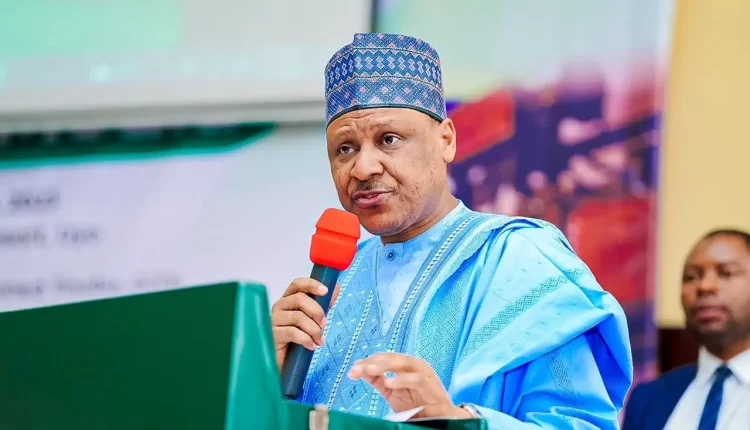
The Nigerian government has shifted its focus from price controls to increased agricultural production as the primary strategy to combat rising food costs, Information Minister Mohammed Idris announced on Tuesday. Speaking at the first Ministerial Briefing Session of 2025 in Abuja, Minister Idris emphasised that boosting food supply is crucial to naturally stabilize prices.
“Once you have an abundance of any product,” he stated, “the natural tendency is for prices to decrease.” This approach marks a departure from previous government interventions that often involved setting fixed prices for essential commodities.
While tackling inflation remains a top priority, the government has also made significant strides in enhancing national security. According to Minister Idris, security forces successfully eliminated over 8,000 terrorists and bandits in 2024, while apprehending 11,600 others. These operations resulted in the recovery of more than 10,000 weapons and the rescue of approximately 8,000 kidnap victims.
The Minister pointed to the improved security situation on major routes like the Abuja-Kaduna highway as evidence of these gains. However, he acknowledged that significant challenges remain and that continued vigilance is crucial. Following a Federal High Court ruling designating the Lakurawa armed group as a terrorist organisation, security forces now have the legal authority to employ maximum force against them.
On the economic front, Minister Idris highlighted several positive developments. The removal of fuel subsidies, a controversial but necessary reform, has plugged significant budgetary leaks, potentially freeing up hundreds of billions of Naira for critical public services.
Read Also: Nigeria’s Food Inflation Surges to 39.84% as Core Inflation Hits 29.28% in December 2024
Furthermore, a new electronic foreign exchange system implemented in December 2023 has streamlined currency transactions, cleared a substantial backlog of foreign exchange requests, and boosted investor confidence. This has translated into tangible results, with the naira recently reaching an eight-month high in official markets.
Foreign investment in the Nigerian stock market has also witnessed a significant surge, climbing from a modest 4% in mid-2023 to a robust 16% by the end of 2024. This influx of foreign capital signals a growing confidence in the Nigerian economy among international investors.
Nigeria further solidified its position as a leading destination for oil and gas investments in Africa last year, attracting over $5 billion in Final Investment Decisions. This significant investment underscores the country’s potential to become a major energy player on the global stage.
Looking ahead, Minister Idris described 2025 as a year for building upon these achievements as the Tinubu administration approaches its mid-term mark. “Over the next three months,” he announced, “we will bring Honorable Ministers to this platform on a weekly basis to provide updates on their respective portfolios and engage in a constructive dialogue with the public.”
Implications
Rising food prices disproportionately impact low-income households, forcing many to make difficult choices between essential needs like food and healthcare. This can lead to increased poverty, malnutrition, and social unrest.
The ongoing security challenges, including terrorism and banditry, have had a devastating impact on communities across Nigeria. These incidents have resulted in loss of life, displacement, and economic disruption, creating a climate of fear and uncertainty.
While the removal of fuel subsidies and the introduction of the new foreign exchange system are crucial reforms, it’s important to acknowledge the potential for short-term disruptions and the need for adequate social safety nets to mitigate the impact on vulnerable populations.