
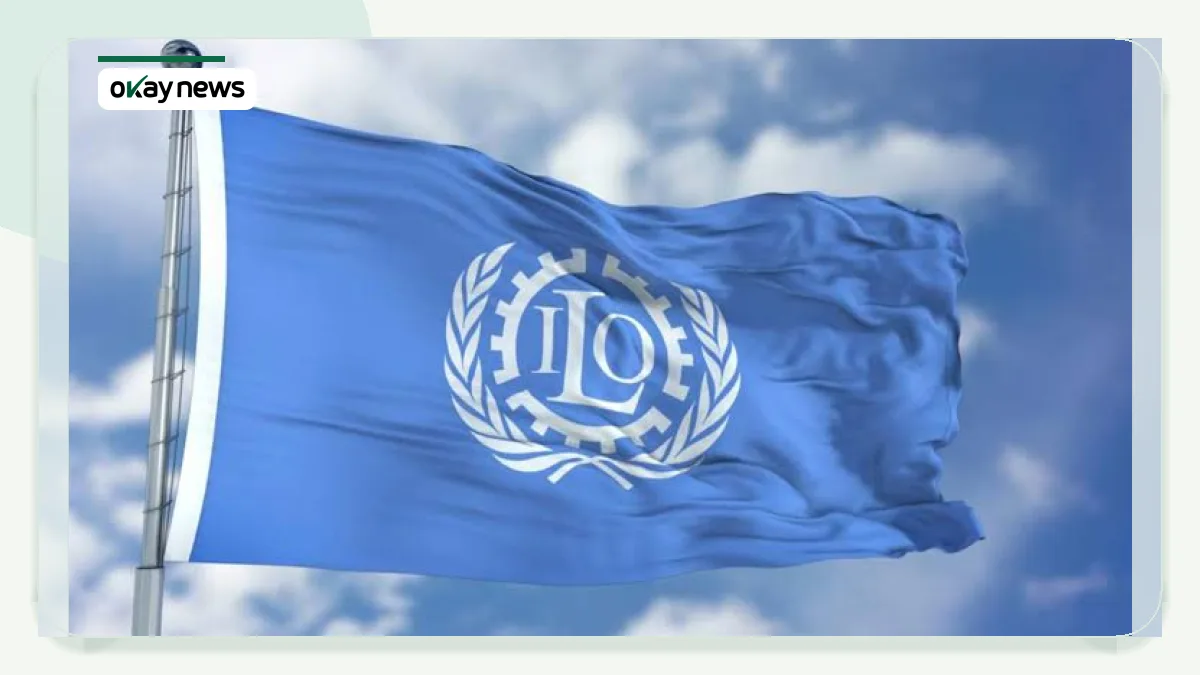
LAGOS, Nigeria — The International Labour Organisation (ILO) has given Nigeria until September 2026 to report on steps taken to address concerns over workers’ rights, trade union freedoms, and compliance with international labour standards.
Okay News reports that the directive was disclosed by the Secretary-General of the Trade Union Congress (TUC), Nuhu Toro, on Friday, June 12, 2026, during a briefing on the 113th International Labour Conference in Geneva, Switzerland.
The issues under review are tied to ILO Conventions 87 and 98, which deal with freedom of association, protection of workers’ right to organise, and collective bargaining rights.
“We are excited that Nigeria has been given a timeline to revert back on issues of core complaints, particularly concerning ILO Conventions 87 and 98. From now to September, Nigeria is expected to revert to the ILO on the issues raised,” Toro said.
Toro described workers’ welfare as a critical issue and expressed optimism that the process would help strengthen labour rights protections and improve compliance with international obligations. He explained that the September deadline gives Nigerian authorities and stakeholders an opportunity to demonstrate progress in addressing concerns raised by labour groups.
The TUC Secretary-General welcomed efforts to boost gender inclusion in trade unions, noting that positions such as state secretary and vice-chairperson are reserved for women across all 36 states and the FCT, improving female representation within the labour movement.
However, Toro raised concerns over alleged interference by some state governments in union activities, citing Lagos, Rivers, and Edo as examples where labour leaders were reportedly undermined. He urged governments to respect workers’ rights, uphold freedom of association, and allow unions to operate independently.
The Federal Workers Forum recently rejected a proposed N100,000 (approximately $65) national minimum wage, saying it remains inadequate given Nigeria’s current economic realities. The group cited worsening living conditions, low pay, unpaid arrears, and insecurity, adding that the existing N70,000 (approximately $45) minimum wage has not improved workers’ purchasing power.
The Nigeria Labour Congress (NLC) State Council in Lagos has separately demanded a review of the minimum wage from N85,000 (approximately $55) to N225,000 (approximately $146), citing severe economic pressure and a sharp decline in workers’ ability to afford basic needs.
President Bola Tinubu signed the N70,000 national minimum wage into law on July 18, 2024, after negotiations with the NLC and TUC, reducing the wage review cycle from five years to three. Implementation remains uneven across states more than two years later.
Imo State pays the highest minimum wage at N104,000 (approximately $68) as of October 2025, while Ebonyi pays N90,000 (approximately $58) following an August 2025 review. Lagos and Rivers pay N85,000 (approximately $55), while states including Kaduna, Kogi, Gombe, and Kano remain at the federal minimum of N70,000 to N72,500 (approximately $45-$47). Zamfara remains in a partial or delayed implementation phase as of 2026.