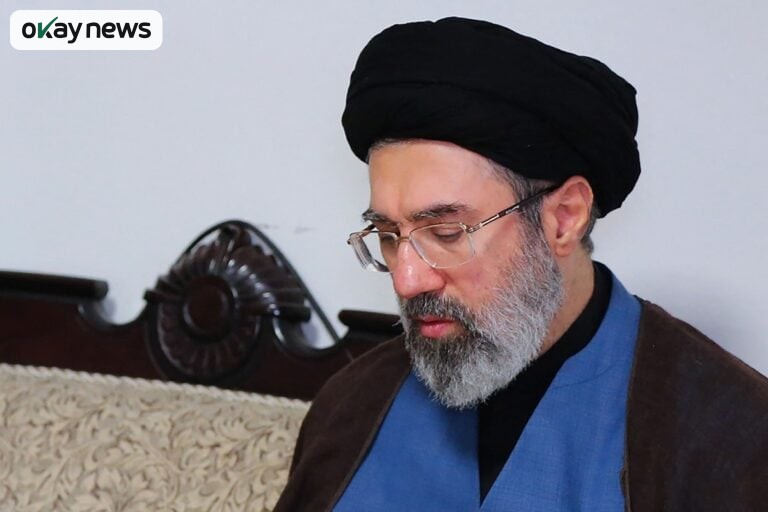
Tehran, Iran — Iran’s powerful clerical body responsible for selecting the country’s highest political and religious authority has appointed Mojtaba Khamenei as the new supreme leader following the death of his father, Ayatollah Ali Khamenei.
Iran’s Assembly of Experts, the constitutional body tasked with choosing and supervising the supreme leader in the Islamic Republic of Iran, announced the decision on Sunday, March 8, 2026, according to reports carried by Iranian state media and international broadcaster Al Jazeera.
The Assembly of Experts said Mojtaba Khamenei was chosen after what it described as a “decisive vote” by members of the council.
In a statement distributed by state media, the clerical body urged citizens across the country to rally behind the newly appointed leader and maintain national unity at a time of heightened regional tensions.
The statement called on the public, “especially the elites and intellectuals of the seminaries and universities,” to pledge allegiance to the leadership and safeguard unity in the country.
Okay News reports that the leadership transition comes only days after the death of Ayatollah Ali Khamenei, who had served as the supreme leader of the Islamic Republic of Iran since 1989, making him one of the longest-serving leaders in the Middle East.
According to reports, the elder Khamenei was killed on Friday, February 28, 2026, during a joint United States and Israeli military air operation targeting leadership facilities in Tehran, the capital city of Iran. The strike took place amid rapidly escalating tensions in the region.
His death immediately triggered intense debate and speculation within Iran’s political and religious circles about who would succeed him as the country’s supreme leader.
Mojtaba Khamenei had long been considered one of the leading contenders for the role, although his potential selection had also sparked concerns among some observers inside Iran about the possibility of hereditary succession in a system that officially rejects dynastic leadership.
The newly appointed leader is a mid-ranking Shiite Muslim cleric who has for years been regarded as an influential figure behind the scenes in Iran’s political system. Analysts have often linked him closely with the Islamic Revolutionary Guard Corps (IRGC), the powerful military organisation established after Iran’s 1979 Islamic Revolution to protect the country’s political system.
Despite maintaining a relatively low public profile compared with his father, Mojtaba Khamenei has been widely believed to play an important role in shaping internal political decisions within the Islamic Republic.
Before the announcement, United States President Donald Trump had publicly criticised the possibility that Mojtaba Khamenei might succeed his father. Trump reportedly described him as a “lightweight” and suggested that he should not be allowed to play a role in determining the country’s leadership.
Under Iran’s constitution, the Assembly of Experts has the authority to select the supreme leader, who holds the highest position of power in the Islamic Republic. The office carries ultimate authority over national policy, the armed forces, and the country’s judiciary.
Mojtaba Khamenei’s selection marks one of the most significant political transitions in Iran in decades and comes at a time of intense geopolitical tension following the death of his father and the growing conflict involving Iran, Israel, and the United States.