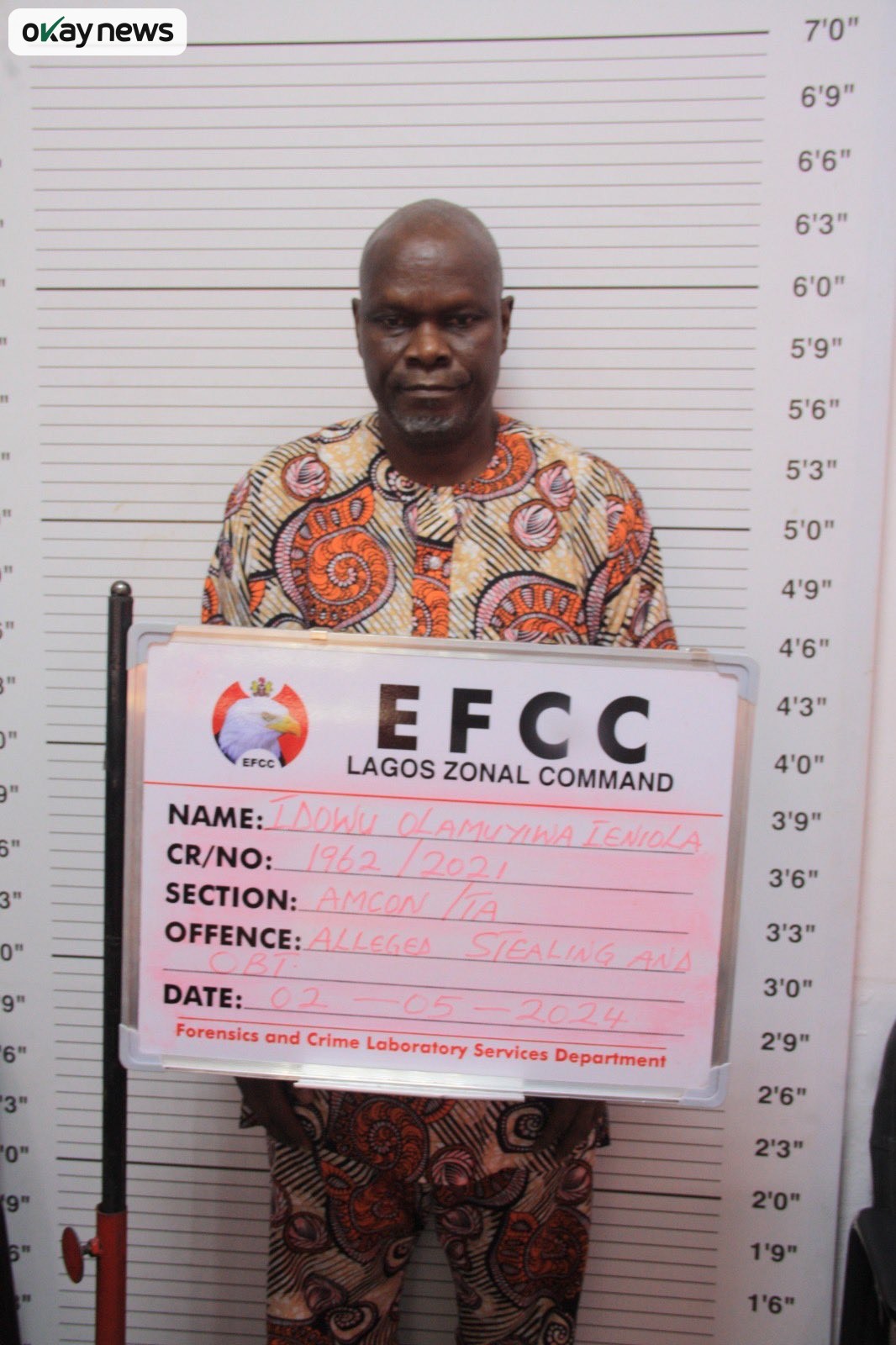
Lagos, Nigeria – A Lagos State High Court sitting in Ikeja has sentenced businessman Olumuyiwa Teniola Idowu and his company, Tennyvans Nigeria Limited, to a combined 30 years in prison over a fraud involving $62,500 and €36,020. The Economic and Financial Crimes Commission disclosed the conviction in a statement shared on its verified X account on Monday.
Okay News reports that Justice Ismail Ijelu found Idowu and Tennyvans guilty on six counts relating to the dishonest conversion of funds belonging to a foreign client, Rene Theodorous Johannes Brouwers of Brouwers USA Trucks and Parts. The case involved two separate transactions: the purchase of Caterpillar parts and the procurement of a DAF truck, box trailer, and two tipper trucks, for which the Nigerian businessman allegedly diverted the money for personal use instead of completing the orders.
Idowu was first arraigned on November 27, 2024, and initially pleaded not guilty. Prosecution counsel E. S. Okongwu presented three witnesses and 11 exhibits, all admitted by the court, while defence counsel Kehinde Olawumi called one witness. The judge held that the case had been proved beyond reasonable doubt and sentenced Idowu to five years’ imprisonment on counts one to four, to run concurrently, plus five years each on counts five and six, again with concurrent terms. The court also gave an option of a N1 million fine on each count and ordered full restitution of $62,500 and €36,020 to the victim within six months. Idowu has been remanded at Ikoyi Correctional Centre.
The case is part of a broader push by the EFCC to pursue financial fraud, including cross‑border operations and the recovery of stolen funds. Earlier this year the agency returned over $225,895 and N62.79 million to foreign victims and handed over about N3.9 billion in recovered proceeds to the Nigerian National Petroleum Company Limited. The Idowu judgment underscores the growing emphasis on holding individuals and companies criminally liable for misappropriations that affect international business partners and Nigeria’s financial‑crime reputation.