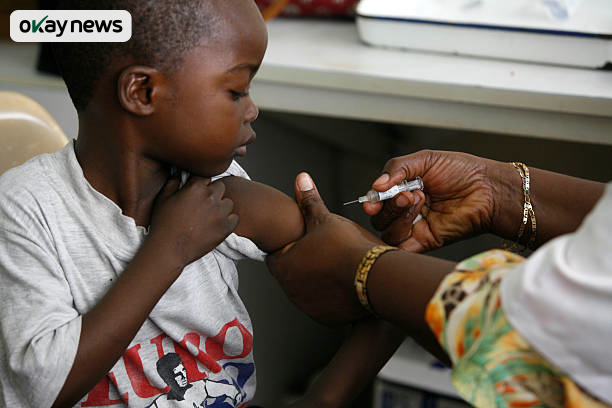
LAGOS, Nigeria — The Lagos State Government allocates approximately 5 percent of its health budget to immunisation and has achieved a routine coverage rate of 66 percent, yet between 120,000 and 130,000 children in the state remain completely unvaccinated, Ibrahim Mustafa, Permanent Secretary of the Lagos State Primary Health Care Board, said in an interview marking World Immunisation Week.
Okay News reports that Mustafa disclosed the figures during a conversation released on April 26, 2026, noting that immunisation in Lagos is sustained by a combination of federal vaccine supply and state‑level spending on logistics, cold chain systems and service delivery.
“The state now commits a lot of resources to ensure that these vaccines get to the arms of the children,” Mustafa said, adding that agencies such as the National Primary Health Care Development Agency, the World Health Organization, UNICEF, Gavi, the Vaccine Alliance, and AFENET provide additional support.
Mustafa attributed a large share of the unvaccinated “zero‑dose” children to rapid migration into Lagos, where families often arrive with children whose vaccination schedules are incomplete or have not started. Many of these children live in hard‑to‑reach communities such as Makoko, parts of Alimosho, and Ikorodu.
On the Human Papillomavirus (HPV) vaccine, introduced about two years ago for girls aged nine to 14, Mustafa said acceptance has climbed sharply after initial resistance that included physical attacks on vaccinators in Ibeju‑Lekki. An engagement campaign involving religious and community leaders, media outreach and social media advocacy helped turn the tide.
“We moved from very serious hesitancy to strong demand. Now, in many cases, people are asking for the vaccine themselves,” he said, adding that no fewer than 1.5 million girls have now received the HPV vaccine.
Nigeria has the highest number of zero‑dose children globally, with about 2.1 million recorded in 2023, mostly in northern states. According to the World Health Organization, vaccines have saved more than 150 million lives over the past 50 years. World Immunisation Week runs from April 24 to 30, with the theme “For every generation, vaccines work.”