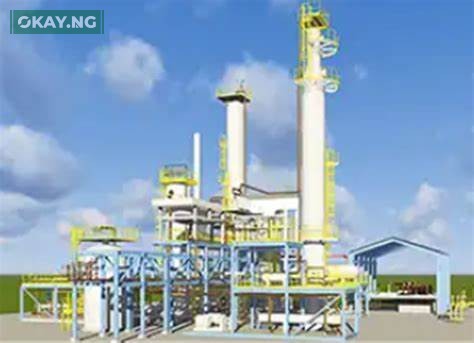
Despite pledges from the Nigerian National Petroleum Company Limited (NNPCL) to support local refining capacity, numerous modular refineries are still awaiting their initial crude oil supplies, hindering the nation’s progress towards energy self-sufficiency. These smaller, flexible refining units, considered vital for reducing Nigeria’s dependence on imported petroleum products, are currently hampered by a lack of readily available crude.
This delay has forced many modular refineries to operate below their potential or rely on more expensive alternative feedstock sources. Some operators have been compelled to purchase crude from third-party suppliers, while others have had to temporarily cease operations. This situation raises concerns about the effectiveness of government initiatives and the equitable distribution of resources within the oil and gas sector.
One operator, speaking anonymously, voiced their frustration, stating, “We have invested millions of dollars in building our refinery, and everything is ready to go. But without crude oil, we cannot start operations. The NNPC has been promising to supply us for months, but nothing has materialized.” This sentiment underscores the financial strain and operational uncertainty faced by these smaller refineries.
Confirming the report, Eche Idoko, the national publicity secretary of the Crude Oil Refinery-owners Association of Nigeria (CORAN), stated that modular refineries have not received a single drop of crude oil or feedstock from NNPC since the naira-for-crude scheme began in October 2024.
“Most of the modular refineries are producing at low capacity. They’ve had to source feedstock alternatives from third parties, which is usually very expensive,” Idoko explained, highlighting the financial burden placed on these refineries due to supply shortages. He further noted that the majority of modular refineries in Nigeria are operating at approximately 20 percent capacity, a stark underutilization of their potential.
Read Also: Oil Producers Accused of Diverting Crude Oil Meant for Local Refineries
Currently, Nigeria has 30 licensed modular refineries. Five are operational, producing diesel, kerosene, black oil, and naphtha, including Waltersmith refinery (5,000 bpd), Aradel refinery (11,000 bpd), OPAC Refinery (10,000 bpd), Duport refinery (2,500 bpd), and Edo refinery (6,000 bpd). Approximately 10 more are in various stages of completion, while others have received licenses to establish.
Idoko pointed out the struggles even for operational refineries, stating, “Edo refinery has had to resort to third parties and then they truck, which makes their landing cost four times what it’s supposed to be. Walter Smith and Aradel refineries are producing because they are sourcing directly from their marginal fields. Even for those refineries, what they source from their marginal refineries cannot satisfy the needs of their plants.”
Industry insiders suggest that the NNPC’s focus has been primarily on larger refineries, particularly the Dangote Petroleum Refinery. On March 11, NNPC announced it had begun discussions to extend its contract for supplying crude oil to Dangote Refinery in naira. The original six-month agreement, ending this month, was implemented to address supply issues reported by local refineries. Under this arrangement, NNPC Ltd has supplied 48 million barrels of oil to Dangote Oil Refinery.
While the initial plan included supplying seven other smaller refineries, only Dangote Refinery ultimately benefited from the agreement, and even then, received less than the initially agreed-upon volumes. This raises questions about the prioritization of resources and the potential impact on smaller players in the refining sector.
Meanwhile, the Technical Sub-Committee on the Naira-for-Crude Policy has convened to review the policy. The meeting included key stakeholders such as Wale Edun, Minister of Finance and Coordinating Minister of the Economy, and representatives from various regulatory bodies and refineries. Discussions centered on sustaining the policy, with stakeholders presenting reports on crude delivery, domestic production, and crude availability for local refining.
The situation with modular refineries highlights a potential disconnect between policy objectives and implementation realities. While the government aims to boost local refining capacity, the challenges faced by these smaller refineries in accessing crude oil raise concerns about the equitable distribution of resources and the effectiveness of support mechanisms. This situation underscores the complexities of achieving energy independence and the need for a more inclusive approach that supports all players in the refining sector, not just the large-scale operations. The implications for Nigeria’s economic development and energy security are significant, and it remains to be seen how these challenges will be addressed to ensure a more robust and equitable refining landscape.