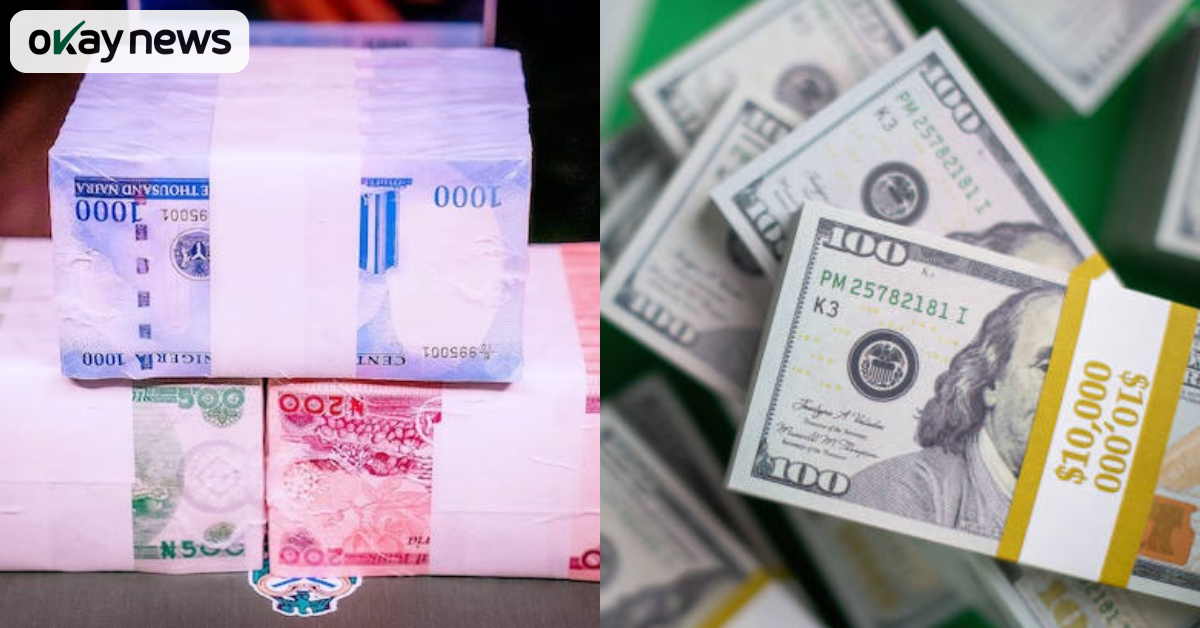
Lagos, Nigeria – The naira weakened slightly to N1,387 per dollar on Tuesday, compared to N1,386.75 recorded in the previous session, amid a decline in Nigeria’s external reserves to $49.29 billion by the end of March 2026.
Okay News reports that the marginal depreciation reflects ongoing pressure in the foreign exchange market despite relatively stable global currency movements. Market activity recorded a total turnover of $30.95 million across 44 deals, indicating moderate trading volumes in the official window. Intra-day trading ranged between N1,385.5 and N1,388 per dollar, with an average rate of N1,386.69.
Nigeria’s foreign reserves fell from $50.03 billion on March 11 to $49.29 billion by March 30, representing a decline of about $547 million. The reserves decline occurred gradually over the period rather than through a single sharp drop, suggesting persistent but controlled pressure on the naira alongside a steady drawdown in external buffers.
Global currency markets remained relatively stable, with the U.S. dollar holding steady amid easing safe-haven demand linked to geopolitical tensions. The dollar index slipped slightly by 0.03 percent to 99.70, while the euro gained 0.21 percent to trade at $1.1576. The Japanese yen strengthened to 158.55 per dollar, recovering from earlier lows amid improved business sentiment in Japan.
The current movement in the naira comes against the backdrop of Nigeria’s ongoing foreign exchange reforms, which have seen the central bank adopt a more market-driven exchange rate system since mid-2023. While these reforms have improved transparency and narrowed the gap between official and parallel market rates, they have also exposed the naira to market forces, resulting in periodic volatility.
The apex bank has projected that reserves could reach $51 billion by the end of 2026 as part of its broader macroeconomic stabilization and confidence-restoration agenda. This medium-term strategy aims to strengthen balance-of-payments resilience and is linked to expanded domestic refining, notably the Dangote Refinery’s planned capacity increases. This exchange rate movement reflects ongoing adjustments in Nigeria’s liberalized foreign exchange market. Sustained stability in the exchange rate will depend on continued accretion to reserves and policy consistency.