


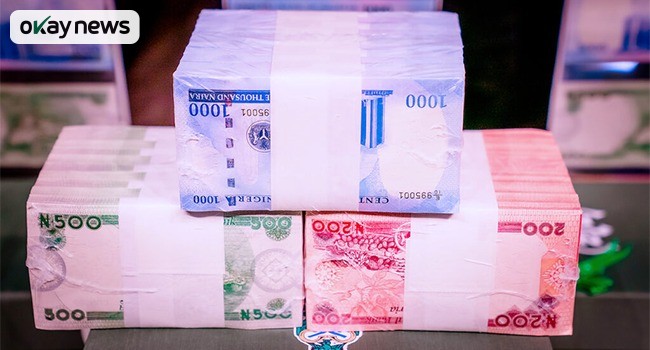
Abuja, Nigeria – The naira depreciated to N1,359 per dollar on Tuesday following the conclusion of the 304th Monetary Policy Committee meeting of the Central Bank of Nigeria, reflecting mild pressure in the official foreign exchange market after the policy announcement.
Okay News reports that the currency closed weaker compared to N1,353.5 per dollar recorded on Monday, as investors digested the implications of the apex bank’s latest monetary policy decision. The CBN reduced the Monetary Policy Rate by 50 basis points from 27 percent to 26.5 percent, marking a shift toward monetary easing after a prolonged tightening cycle.
Other policy parameters were left unchanged, with the Cash Reserve Ratio retained at 45 percent for commercial banks and 16 percent for merchant banks, the Liquidity Ratio maintained at 30 percent, and the Standing Facilities Corridor fixed at +50/-450 basis points around the MPR. At the meeting, CBN Governor Olayemi Cardoso revealed that Nigeria’s gross external reserves rose to $50.45 billion as of February 16, the highest level in 13 years, providing an import cover of 9.68 months.
Cardoso stated that the MPC noted the remarkable performance of Nigeria’s external sector, which has contributed to greater stability in the foreign exchange market and bolstered investor confidence. He maintained that confidence remains central to the foreign exchange framework, noting that without market confidence, no matter what you do, you will significantly suboptimise.
The naira’s reaction to the 304th MPC decision contrasts with movements observed after previous meetings. After the 303rd MPC meeting in November, the naira appreciated to N1,441 per dollar, while following the 302nd meeting, the currency weakened to N1,493.2 per dollar. These mixed reactions suggest that foreign exchange movements are influenced not only by interest rate decisions but also by broader liquidity conditions and market sentiment.
Headline inflation declined for the eleventh consecutive month to 15.1 percent in January 2026, providing room for the measured policy adjustment. The MPC’s decision to cut rates while retaining other parameters signals continued caution despite improving macroeconomic indicators. The modest naira depreciation following the rate cut suggests that market participants are weighing the benefits of lower rates against potential impacts on foreign portfolio flows. The path of the exchange rate will depend on sustained accretion to reserves and continued policy consistency. Managing the exchange rate remains a key priority for monetary authorities as they balance inflation control with growth considerations.