Lagos, Nigeria — The price of cooking gas in Nigeria has surged sharply following escalating tensions in the Middle East, pushing up costs for households and businesses across Africa’s most populous country.
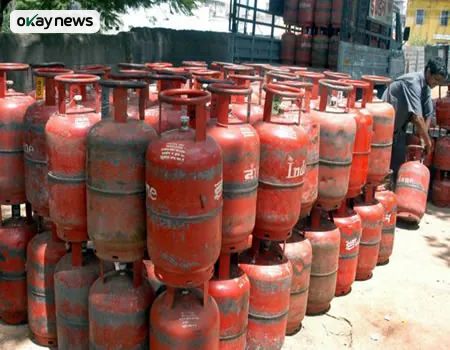
Liquefied Petroleum Gas, widely known as cooking gas, is a key household fuel in Nigeria, where more than 200 million people rely on it for daily cooking. Industry data show that the ex depot price has risen by 13 percent within one week, climbing to ₦18 million (about $11,250) per 20 metric tonnes from ₦15.95 million (about $9,970) recorded the previous week. The naira is Nigeria’s official currency.
The increase at the wholesale level has translated into a retail price of about ₦1,400 (about $0.88) per kilogramme, up from ₦1,000 (about $0.63) just a week earlier. This represents a 40 percent jump in what consumers pay.
Market checks across Lagos, Nigeria’s commercial capital in the country’s south west, showed that many filling plants are already selling at the new rate.
The National President of the Nigerian Association of Liquefied Petroleum Gas Marketers, Mr Inyang Edu, confirmed the development. The Nigerian Association of Liquefied Petroleum Gas Marketers represents businesses involved in the distribution and retail of cooking gas across the country.
He said: “We are faced with limited supply in the international market due to the Iraq-Israel-American crisis, which has now triggered the price increase. Even though we produce locally, including supplies from the Dangote Refinery, once prices rise in the international market, it affects domestic prices in naira.”
Nigeria operates the Dangote Refinery, a large scale oil refining facility located in Lagos and owned by the Dangote Group, one of Africa’s largest industrial conglomerates. Although Nigeria produces some Liquefied Petroleum Gas locally, prices remain tied to international oil benchmarks, which are traded in United States dollars.
Edu added: “As of last week, the price dropped to ₦15.95 million per 20 mt from ₦16 million, but with this crisis, it has increased to ₦18 million. Some depots are selling at ₦19 million, but I heard today that one outlet sold at ₦17.5 million.”
At ₦19 million, the equivalent value is about $11,880, while ₦17.5 million equals about $10,940, based on prevailing exchange rates.
According to Edu, marketers who previously bought stock at ₦15.95 million or ₦16 million per 20 metric tonnes now have to adjust prices upward to remain viable. He appealed to consumers and retailers not to blame plant owners for the rise, stressing that the increase reflects international supply pressures rather than local decisions.
“We are hopeful that the crisis will be resolved soon, but even when it is, it will take time for prices to drop. For now, the effect of the crisis is impacting the entire oil and gas industry.”
On supply levels, he explained that overall availability remains relatively stable, although some depots are temporarily out of stock as they await new shipments.
“Since the beginning of the year, supply has been stable. It was this Middle-east crisis that affected prices. Crude oil is an international commodity priced in dollars,” he said.
The broader impact extends beyond cooking gas. Global crude oil prices recently rose to $84 per barrel amid the regional conflict. Edu noted that the Dangote Refinery has also adjusted the ex depot prices of petrol, diesel and cooking gas in response to higher global costs.
He said the ex depot price of Premium Motor Spirit, the official name for petrol in Nigeria, increased to ₦875 (about $0.55) per litre from ₦774 (about $0.48).
“This is likely to have a ripple effect on the domestic economy, including transportation costs, food prices and overall economic activity. Given the removal of fuel subsidy, returning to subsidised pricing is not a feasible solution,” he said.
Nigeria removed its long standing fuel subsidy policy in 2023, allowing market forces to determine petrol prices. As a result, increases in global oil prices now feed more directly into domestic fuel and gas costs.
Edu advised that the federal government of Nigeria should closely monitor global oil price movements and adjust monetary policies where necessary to reduce the impact on businesses and households.
For millions of Nigerian families already facing high living costs, the latest increase in cooking gas prices adds fresh pressure to household budgets. What happens next will depend largely on how quickly tensions in the Middle East ease and whether global oil markets stabilise.
Okay News reports that energy traders and local marketers are watching international developments closely, as further escalation could trigger additional price adjustments in the coming weeks.