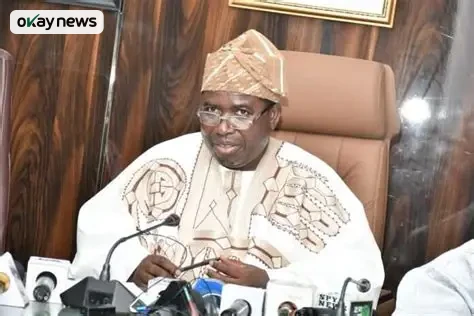
ABUJA, Nigeria. The Independent National Electoral Commission [INEC] in Nigeria has announced it will not rely on artificial intelligence systems or screen captures to investigate a fake social media profile pretending to be its chairman, Joash Amupitan.
The Director of Information and Communication Technology for the electoral body, Lawrence Bayode, confirmed this position during an interview on Channels Television, a Nigerian broadcasting station, at 12:55 PM West Africa Time [WAT] on Monday, April 13, 2026. Bayode explained that the organization is working with national security agencies and independent forensic specialists to determine the origin of the deceptive account. This incident matters because digital impersonation threatens the credibility of the election management body as it prepares for the 2027 general elections.
“We are taking this further because even though we have referred this to security agencies, we rely on evidence. We are also going to be engaging a third party, for instance, forensic experts, to look into this,” Bayode stated. He emphasized that the agency requires verified facts rather than unconfirmed digital images. “I will not base my judgments on screenshots. I will not allow that to guide my conclusion,” he added. Okay News reports that the internal review process is already underway to protect the voting public from being misled by partisan misinformation. “We are already looking at it in-house. We are preparing for an election. This is happening,” Bayode said.
The controversy centers on a post from the year 2023 made by Dayo Israel, the National Youth Leader for the ruling All Progressives Congress [APC] in Nigeria. In that message, Israel claimed political success in an area dominated by the Igbo ethnic group. The original message stated, “Today I rejoice, not just for delivering my polling unit, but for winning 7 of the 10 polling units in my nearby Igbo-dominated community where APC have NEVER WON… I sat with the youth of the community and forged a partnership.” Recently, critics shared images suggesting that a profile belonging to the electoral commission chairman replied to that post with the words, “Victory is sure.” This sparked accusations of political bias against the independent election umpire.
INEC has consistently rejected these allegations, calling them a coordinated misinformation campaign. The agency clarified that Joash Amupitan, who holds the title of Senior Advocate of Nigeria [SAN], does not maintain a personal account on the X social media platform and has never participated in partisan political discussions.
Addressing claims that the artificial intelligence program GROK linked the fake account to the chairman, the Information and Communication Technology director warned against trusting such systems without verification. “You know, GROK honestly can hallucinate just like any modern artificial intelligence system,” Bayode noted. He stressed that machine-generated outputs can be flawed. “So yes, any AI system can hallucinate. And so GROK can also hallucinate,” he concluded.
The situation highlights a growing concern over digital security and identity theft in Nigerian politics. Bayode pointed out that public details, such as phone numbers and email addresses, are easily stolen to create deceptive profiles. “Email addresses and phone numbers you mentioned are in public domain. Anyone who wants to create havoc can use all of this information and use it this way,” he explained.
Because the electoral commission plans to increase its use of digital systems for the 2027 national elections, officials are treating this incident as a critical warning. “We are going to be deploying technology massively during the 2027 general election. If this is already happening now, then we need to ensure that we do the needful,” Bayode said. He warned that the current situation is part of a larger threat. “What we are seeing is something bigger. What we are seeing is digital impersonation,” he stated.
Moving forward, the commission will continue its collaboration with law enforcement to track down the individuals responsible for the digital manipulation. This ongoing effort aims to protect the integrity of the electoral process and prevent future attempts to undermine public trust through digital forgery.