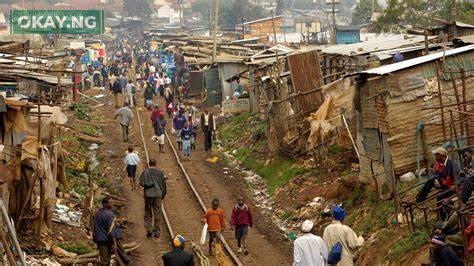
Despite projections of moderate economic growth, Nigeria is expected to experience an increase in poverty levels over the next two years, according to a recent report by the World Bank. The multilateral lender’s Africa Pulse report, titled ‘Improving Governance and Delivering for People in Africa,’ highlights a concerning trend: while non-resource-rich African nations are expected to see continued poverty reduction and faster growth, resource-rich countries like Nigeria face a different reality.
The World Bank projects a challenging outlook for Nigeria, stating, “Resource-rich countries are expected to see less progress in terms of poverty reduction.” The report further emphasizes the severity of the situation for fragile, resource-rich nations, noting, “Importantly, poverty in resource-rich, fragile countries (which include large countries like the Democratic Republic of Congo and Nigeria) is expected to increase by 3.6 percentage points over 2022–27.”
This projection comes even as the Nigerian government has implemented various safety net programs over the past two years. However, the World Bank suggests these measures may be insufficient to lift millions out of poverty.
Economic reforms implemented roughly 20 months ago, while bringing about positive changes such as a market-driven economy, have also contributed to the problem. The World Bank notes that poverty has worsened, with the number of people living in poverty rising from 104 million to 129 million within a year.
Currently, Nigeria accounts for 19 percent of the total poverty share in Sub-Saharan Africa, a significant portion compared to other nations in the region. The World Bank identifies other countries with high poverty shares, including the Democratic Republic of Congo (14 percent), Ethiopia (9 percent), and Sudan (6 percent).
However, amidst the concerns about rising poverty, the World Bank does project moderate economic growth for Nigeria. The lender forecasts Nigeria’s annual GDP growth to reach 3.6 percent in 2025 and 3.8 percent in the following two years. “Economic growth is expected to remain moderate in Nigeria,” the report states. “It is expected to increase from 3.4 percent in 2024 to 3.6 percent in 2025, and slightly increase to 3.8 percent in 2026–2027.”
Read Also: Nigeria GDP Growth Forecasted Amid Tax Reforms
The World Bank attributes this gradual economic recovery to the service sector, particularly finance, information and communications technology, and transportation. A modest rebound in oil production, aligning with OPEC+ quotas, is also expected to contribute.
The World Bank’s growth projections are somewhat more optimistic than those of the International Monetary Fund (IMF), which recently revised its 2025 growth forecast for Nigeria downward to 3.0 percent, from an initial projection of 3.4 percent in 2024. The IMF cited weakening oil supply and escalating global trade tensions as reasons for the downward revision.
Both the World Bank and IMF projections, however, fall short of Nigeria’s own ambitious GDP growth target of 4.6 percent, as outlined in the 2025 budget.
Investment banker and economist Adetilewa Adebajo emphasizes the need for Nigeria to pursue economic diversification, infrastructure development, and asset optimization. “Sale of oil and gas JV assets to optimise equity within the FGN capital structure and balance sheet are crucial for Nigeria’s path towards sustainable development,” Adebajo stated. He also highlighted the importance of strategic investment projects, such as agro-airport development and deep-sea port projects, and the need to replicate major infrastructure projects led by companies like Arise and Dangote nationwide.