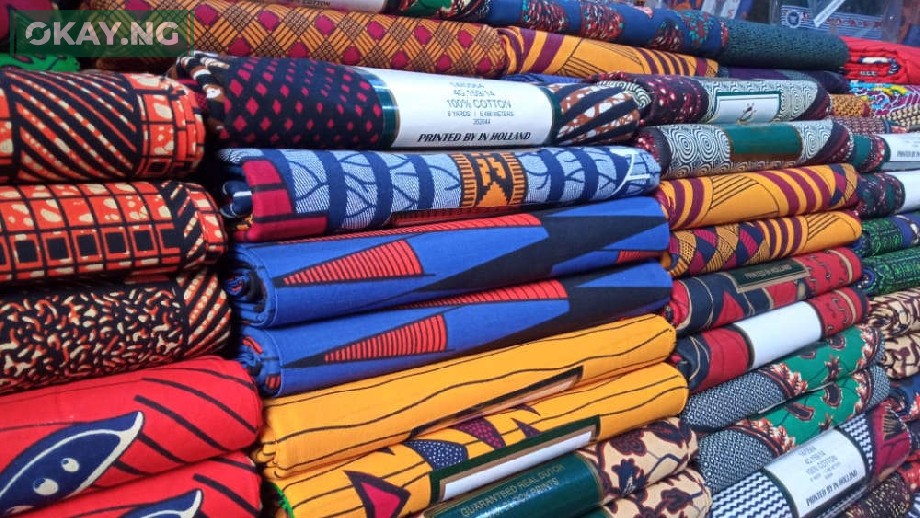
Nigeria’s insatiable appetite for foreign textiles is costing the nation dearly, with an annual import bill exceeding a staggering $6 billion. This alarming figure, revealed by Minister of State for Industry, Trade, and Investment, Sen. John Enoh, during a recent visit to Sunflag Nigeria Ltd., underscores the urgent need to revitalise the ailing domestic textile industry.
“You would be surprised to know that we import $6 billion every year of textiles into Nigeria, and Nigerian consumers, by doing that, employ 750,000 Chinese and Indian workers in their countries to clothe ourselves,” Sen. Enoh lamented, highlighting the stark reality of a nation outsourcing its garment needs while its own citizens struggle for employment.
Decades ago, Nigeria boasted a thriving textile sector, a powerhouse of job creation that rivalled the government itself. However, a confluence of factors, including rampant smuggling, inadequate infrastructure, and a hostile policy environment, has systematically eroded the industry’s foundations.
This dependence on foreign textiles has not only stifled economic growth but also had a devastating impact on local livelihoods. According to Alok Bhardwaj, Managing Director of Sunflag Nigeria Ltd., “You would be surprised to know that by importing textiles, Nigerian consumers are indirectly employing 750,000 workers in China and India, while our local industry struggles to survive.”
The human cost of this neglect is undeniable. The vibrant textile industry that once employed over 250,000 workers across 250 companies has been decimated, now employing a mere fraction of that workforce. This decline has reverberated through the entire value chain, from cotton farmers struggling to find markets to garment producers facing an uphill battle against cheap imports.
The problem is compounded by the unchecked influx of smuggled second-hand clothing, which poses a significant threat to local tailors and textile producers. “This practice negatively impacts local tailors and textile producers, with an estimated 1.5 million Nigerian tailors affected by the uncontrolled importation of used clothing,” Bhardwaj noted.
The economic implications of this situation are profound. “The employment of our people has a multiplying effect on the economy,” Bhardwaj emphasised. “For Nigeria to achieve its industrial growth targets, we must prioritise local production and create a level playing field for Nigerian manufacturers.”
Recognising the urgency of the situation, the Tinubu administration has pledged its commitment to revitalising the textile sector. “My visit here is to assure you that this government is committed to changing the situation,” Sen. Enoh declared, emphasising the government’s focus on promoting “Made-in-Nigeria” goods and services to foster sustainable industrial development.
This commitment is crucial. By implementing policies that encourage local production, curb smuggling, and attract investment into the sector, the government can unlock the immense potential of the textile industry, creating jobs, boosting economic growth, and fostering self-reliance.
The $6 billion spent on textile import represents a missed opportunity for Nigeria. By investing in its domestic textile industry, the nation can not only reduce its reliance on foreign goods but also create a vibrant and sustainable economic sector that benefits millions of its citizens. The time for action is now.