


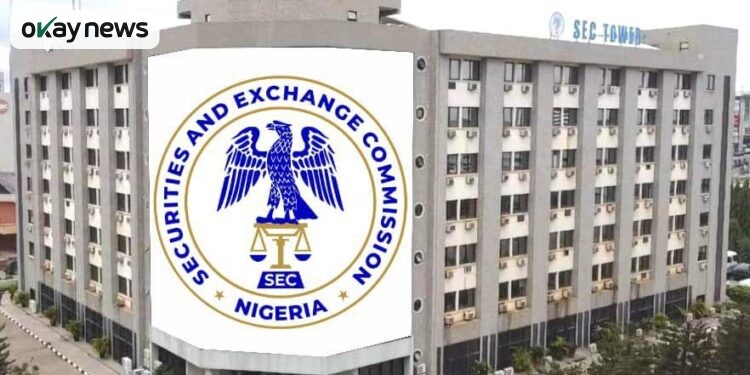
Lagos, Nigeria – Nigeria’s Securities and Exchange Commission (SEC) says the capital market must play the central role in closing the country’s estimated $100 billion infrastructure funding gap. Director General Emomotimi Agama outlined this strategy at the Emerging Africa Capital Limited Investor Summit & Awards.
Okay News reports that Nigeria is shifting away from over‑reliance on bank loans and using its capital market to mobilise long‑term funds. The goal is to channel idle liquidity into productive sectors such as energy, transport, and housing.
Agama said the global economy is undergoing a structural reconfiguration, with volatile dollar flows and shifting Western priorities. He added that Nigeria must use this period to strengthen its capital‑market framework and attract patient, risk‑calibrated capital from domestic and foreign investors.
“For Nigeria — with a population of over 220 million people, the largest economy on the African continent by nominal GDP, and an enormous infrastructure deficit estimated at over $100 billion — the capital market is not a luxury. It is an existential necessity,” Agama said.
The SEC is promoting instruments like infrastructure bonds, green bonds, sukuk, and private equity vehicles. These tools can fund long‑term projects and improve capital allocation across sectors. The commission also highlights untapped opportunities in solid minerals and financial inclusion, where 350 million adults remain unbanked.
The SEC has launched a broader reform agenda to align Nigeria’s market with global standards. The plan includes upgrading market infrastructure, expanding products, improving transparency, and boosting investor protection. There is also a push to attract more domestic participation and deepen international integration.
With macroeconomic reforms continuing and a young population driving future demand, Nigeria is positioning itself as a key destination for long‑term investment. The capital market will be central to financing sustainable growth and helping the country bridge its infrastructure gap.

 says the capital market must play the central role in closing the country’s estimated $100 billion infrastructure funding gap. Director General Emomotimi Agama outlined this strategy at the Emerging Africa Capital Limited Investor Summit & Awards.)