


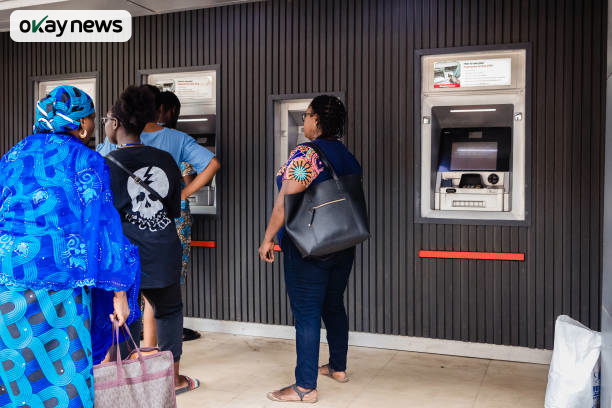
Abuja, Nigeria – Nigeria’s Central Bank has directed banks and financial institutions to significantly expand their cash machine networks, requiring a minimum of one Automated Teller Machine (ATM) for every 7,500 payment cards issued by 2028.
The directive was issued in a circular dated March 13, 2026, signed by Musa Jimoh, Director of the Payments System Policy Department.
Okay News reports that compliance will be phased over three years, with institutions expected to reach 30 percent of the requirement in 2026, 60 percent in 2027 and full compliance by 2028.
The Central Bank of Nigeria said the updated framework is designed to improve public access to cash services, strengthen machine deployment standards and align the country’s payment infrastructure with global practices. The review was prompted by rising cyber threats, expanding digital finance and growing demand for financial inclusion.
The guidelines also introduce new rules on how ATM transactions are processed. All transactions carried out on machines in Nigeria must be processed by a company operating within the country. The Central Bank explicitly banned any card scheme from routing domestic ATM transactions outside Nigeria for processing or authorisation.
On security, deployers are required to install anti-skimming devices, surveillance cameras and encrypted transaction networks to protect customer data. ATM encryption keys must be changed at least once per year, and machines must not experience technical downtime exceeding 72 consecutive hours without notifying customers.
The guidelines also set strict timelines for resolving failed transactions. Refunds on same-bank ATM failures must be processed instantly, while cross-bank failures must be resolved within 48 hours. Customers must be able to report errors through mobile or web channels without visiting a branch.
Institutions that fail to comply face penalties from the Central Bank, which said it will conduct periodic audits and on-site inspections to monitor adherence to the new standards.


 for every 7,500 payment cards issued by 2028.)