


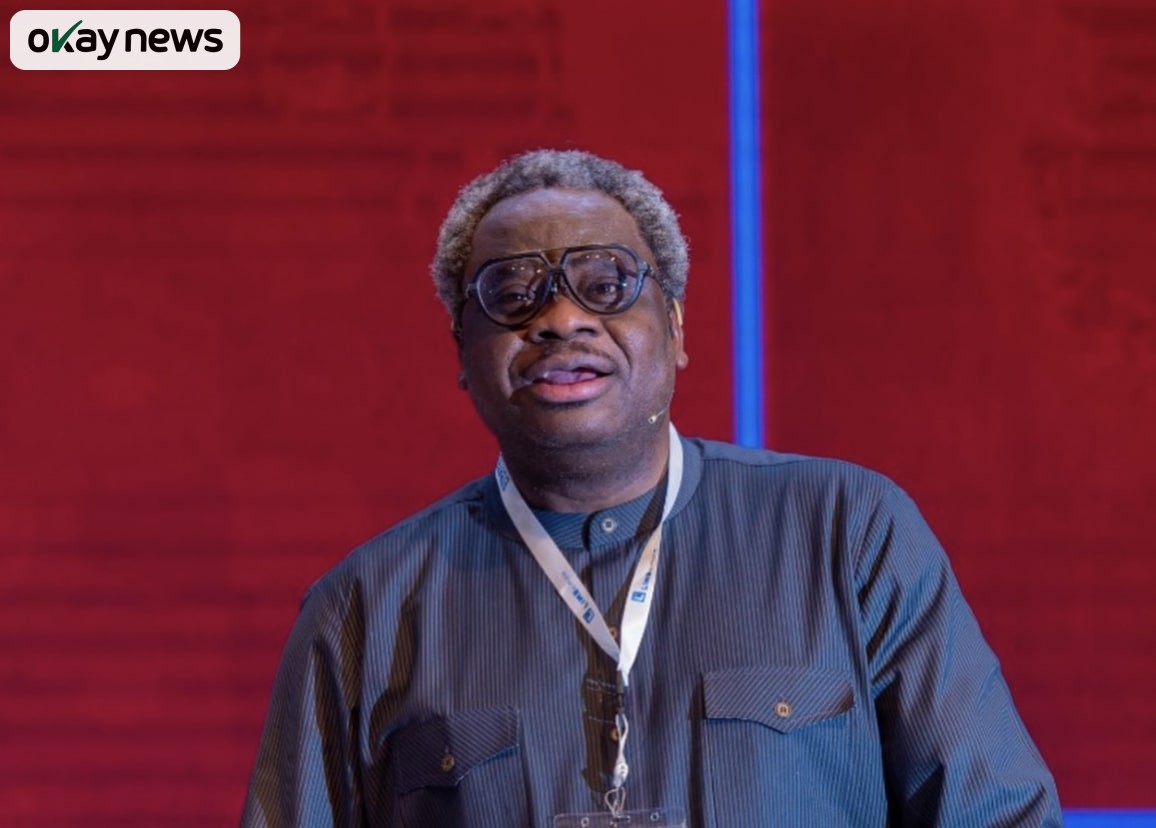
Nigeria’s power sector remains central to the country’s economic and industrial future, with emerging reforms, technology adoption and stakeholder collaboration laying the groundwork for renewed growth, according to Kola Adesina, Group Managing Director of Sahara Power Group.
Okay News reports that Adesina made the remarks while delivering a presentation on the state of Nigeria’s power sector and opportunities ahead, where he expressed optimism that the industry is gradually overcoming long-standing structural and financial challenges.
He said Nigeria is witnessing what he described as unprecedented collaboration among key actors across the electricity value chain, including government institutions, regulators, financial institutions and development partners.
“We are witnessing unprecedented collaboration involving the Federal Government, Power Ministry, Regulatory Agencies, Power Entities, CBN, Banks and multilateral financial and development agencies, and other stakeholders in the power sector. We believe that this trend will continue in 2026 and this will spur sector-wide growth that will translate to greater efficiency, sustainability, and more power for Nigerians,” Adesina said.
While acknowledging the sector’s historic liquidity constraints, the Sahara Power chief commended the Federal Government’s ongoing settlement of legacy debts, describing it as a critical intervention that is restoring confidence and unlocking new investment.
He noted that resolving inherited debts owed to generation companies and gas suppliers is already stabilising the industry and creating room for expansion.
Adesina said measurable progress has also been recorded in metering and customer service, adding that improved cooperation between regulators and operators is expected to enhance supply reliability for consumers.
“Decent progress has been recorded in metering and service delivery, and emerging cooperation between the regulators and operators will further propel value chain optimisation with a positive impact on end-users, directly translating to more supply reliability,” he said.
Looking ahead, Adesina disclosed that the sector is set to experience extensive distribution network reforms, including large-scale infrastructure rehabilitation, the deployment of Advanced Metering Infrastructure and the introduction of modern customer relationship management systems aimed at reducing Aggregate Technical, Commercial and Collection losses.
He said Sahara Power remains committed to partnering with government and industry stakeholders to ensure electricity becomes the backbone of Nigeria’s long-term development.
Sahara Power is Nigeria’s largest private power group, responsible for about 20 per cent of the country’s total electricity generation, with subsidiaries including Egbin Power Plc, the largest thermal power plant in sub-Saharan Africa, First Independent Power Limited in the Niger Delta, and Ikeja Electric, the largest privately operated electricity distribution company in the region.
Adesina revealed that the group is on course to increase its dispatched generation capacity to between 6,500 megawatts and 7,000 megawatts, while also pioneering the launch of a dedicated data centre to support digital transformation in the sector.
He said Sahara Power plans to scale investments in gas and renewable energy sources over the next three to five years to deliver sustainable and affordable electricity for homes and industries.
“The goal is sustainable, affordable, and reliable power for households and industries,” he said.
According to Adesina, the proposed data centre will leverage real-time analytics, predictive maintenance tools and cybersecurity systems, working in collaboration with government and system operators to improve efficiency and transparency across the sector.
“At Sahara, our dedication to the power sector is unwavering as clearly demonstrated by our ambitious investments and sector leadership over the years. We will pursue strategic investments, continuing expansion and tech-led operations to ensure we serve our customers with precision, transparency and excellence,” he added.
On the status of power sector loans, Adesina said discussions with the consortium of banks financing the group remain positive, stressing that Sahara Power continues to service its obligations in line with agreed terms.
He disclosed that the loans, which mature in 2034, have already been substantially repaid.
“Our successes at Sahara are built on a foundation of financial integrity. From inception to date, we have paid the naira equivalent of $438 million (total debt serviced) which is 73% of the original loan of $600 million,” he said.
Adesina noted that the repayment was achieved despite severe liquidity challenges in the sector, including debts owed to Sahara Power and its gas suppliers, which stood at ₦1.514 trillion as of March 31, 2025.
He expressed confidence that the Federal Government’s legacy debt intervention would enable full settlement of outstanding obligations and accelerate growth plans.
“We are grateful for the government’s intervention through the ongoing legacy debt payments which will facilitate full settlement of all outstanding loans to the banks, our obligations to our gas suppliers, technical service providers (operations and maintenance services) etc. We are confident that the loans will be sorted out completely as we are eager to accelerate our growth plans,” he said.
Adesina also aligned Sahara Power’s long-term strategy with the infrastructure and reform agenda of President Bola Ahmed Tinubu, citing improved policy clarity and macroeconomic stability.
“With clear positive policy reforms in the sector, stability in the exchange rate, significant reduction in inflation rate and the associated moderated interest rate, we as well as other investors in the sector can now easily plan with a higher sense of predictability and conviction,” he said.
Industry analysts say the government’s legacy debt resolution programme targeting generation companies and gas suppliers is a major catalyst for restoring investor confidence across the electricity value chain.
Figures from the Nigerian Electricity Regulatory Commission show that more than 2.3 million meters have been deployed under the National Mass Metering Programme since 2020.