


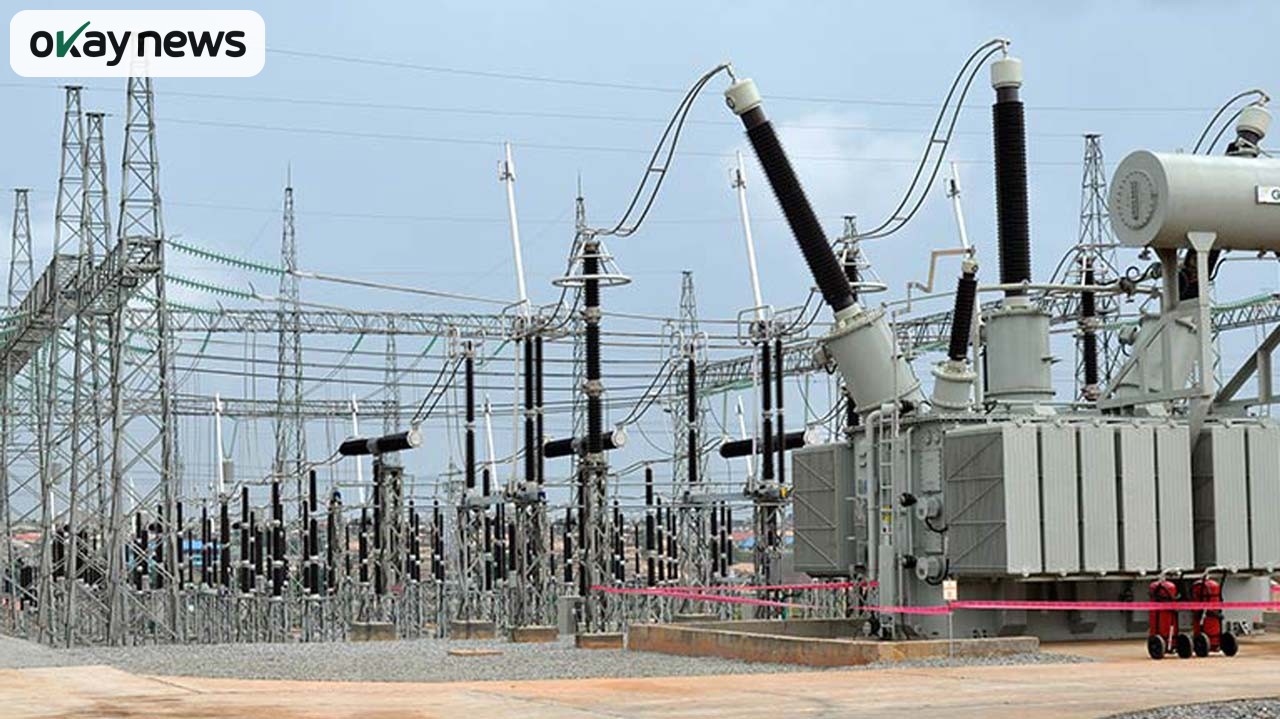
The Nigerian Independent System Operator (NISO) has attributed Friday’s nationwide power outage to a system-wide disturbance caused by multiple 330kV transmission line trips and the disconnection of some grid-connected generating units.
Okay News reports that the incident, which occurred around midday, led to a total shutdown of electricity supply across the country and is confirmed as the first grid collapse recorded in 2026.
Operational data from NISO showed that electricity supply to all 11 distribution companies fell to zero megawatts, plunging homes, businesses, and critical infrastructure into darkness.
The outage demonstrated long-standing concerns about the fragility of Nigeria’s electricity transmission network and the recurring instability of the national grid.
NISO said preliminary findings point to multiple failures on the high-voltage transmission network, which destabilised the entire system.
The disturbance affected both transmission infrastructure and power generation units connected to the grid.
“Preliminary operational reports indicate that the disturbance was associated with the simultaneous tripping of multiple 330kV transmission lines, alongside the disconnection of some grid-connected generating units,” NISO said.
“As of the time of this update, electricity supply has been successfully restored to Abuja, Osogbo, Benin, Onitsha, Sakete, Jebba, Kainji, Shiroro, and parts of Lagos, while restoration efforts are continuing progressively in other parts of the country.”
NISO added that investigations into the root cause are ongoing, with full restoration and stabilisation of the grid as a top priority.
The national grid collapse occurred on Friday afternoon, with power generation falling to zero at approximately 12:40 pm.
Load allocation to the 11 electricity distribution companies dropped to zero megawatts at about 1:00 pm, confirming a complete system failure.
Restoration activities commenced at about 1:15 pm, following established grid recovery procedures.
Several generation and transmission nodes were gradually brought back online in a step-by-step process to avoid further instability.
Nigeria’s national grid has experienced repeated partial and total collapses in recent years, raising concerns among stakeholders and consumers.
The federal government has previously attributed frequent blackouts to the inability of electricity distribution companies to fully absorb generated power, leading to grid imbalances.
Data from the Nigerian Electricity Regulatory Commission shows several partial and total collapses in 2024.
These incidents have intensified concerns about the reliability and resilience of the electricity infrastructure.
Transmission constraints and weak grid management continue to pose risks to stable power supply.
Stakeholders have called for sustained investment in transmission infrastructure and operational efficiency.
Keywords:


 has attributed Friday’s nationwide power outage to a system-wide disturbance caused by multiple 330kV transmission line trips and the disconnection of some grid-connected generating units.)