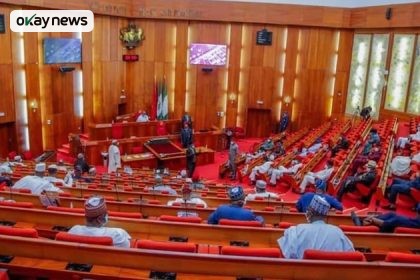
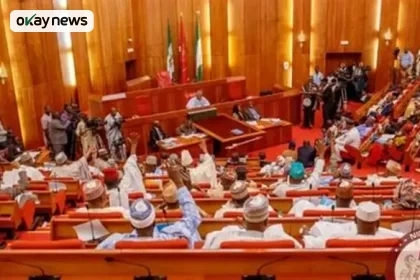
Abuja, Nigeria – Former Abia State governor and current senator representing Abia North, Orji Uzor Kalu, has openly explained why he opposed making electronic transmission of election results compulsory, saying his decision was based on poor network coverage in his community. Speaking during Senate deliberations, Kalu stated bluntly that there is no reliable network service in his village, making electronic transmission impractical in such areas.
Kalu’s position has drawn attention largely because of his long political career. He is a two-term senator, a former two-term governor, a former member of the House of Representatives, and once contested Nigeria’s presidency under the Progressive Peoples Alliance (PPA). His comments came amid intense national debate over the Electoral Act Amendment Bill and whether real-time electronic transmission of results should be mandatory nationwide.
Okay News reports that the Senate, during an emergency plenary session on Tuesday, approved electronic transmission of election results to INEC’s Result Viewing Portal (IReV) but stopped short of making it compulsory. Lawmakers instead adopted a hybrid arrangement that allows manual collation to take precedence where electronic transmission fails due to network or technical challenges. Under the revised provision, results are to be uploaded electronically after voting and paperwork are completed, but Form EC8A remains the primary document where connectivity is unavailable.
Despite backing the revised clause, civil society groups and opposition figures have raised concerns that prioritising manual results in low-network areas could weaken transparency and increase disputes. Adding to the complexity, Senator Kalu was later named as one of 12 senators appointed to a joint Senate–House committee tasked with harmonising electoral reform proposals. His inclusion underscores the central role he is likely to play as lawmakers continue to fine-tune the controversial electoral amendments shaping Nigeria’s future elections.