


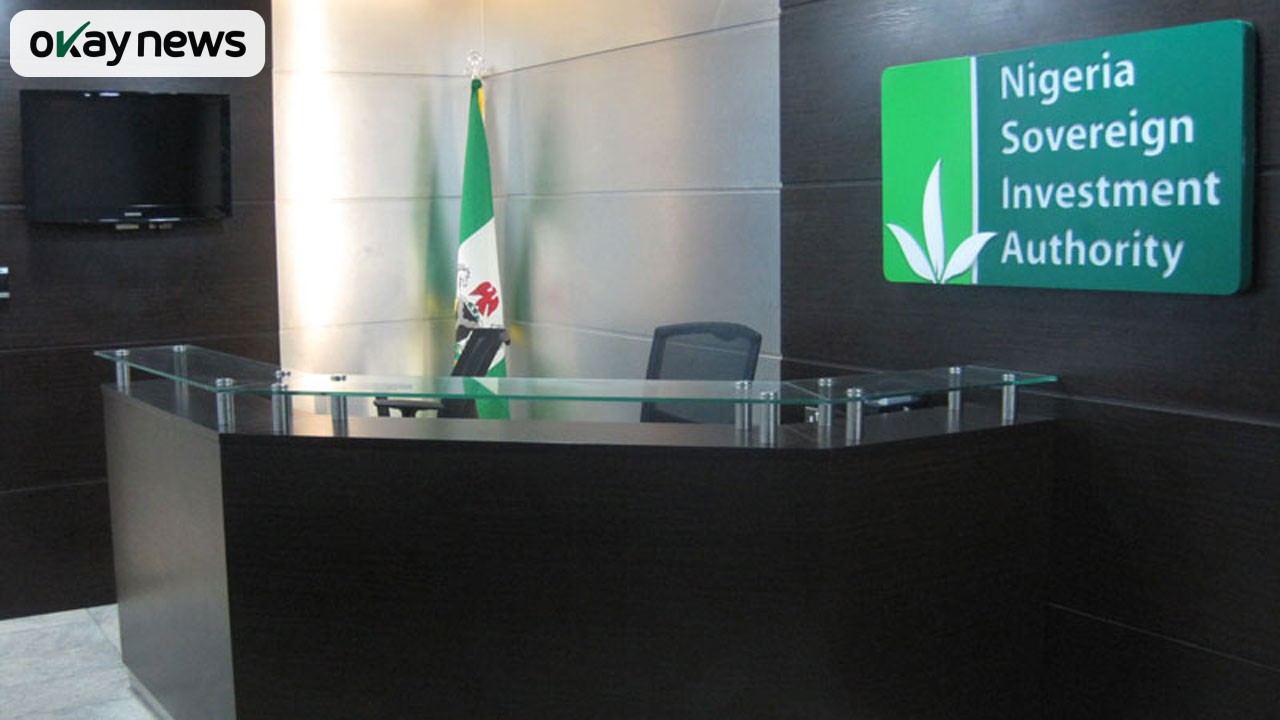
Abuja, Nigeria – The Nigeria Sovereign Investment Authority (NSIA) has announced that its total assets climbed to $3.4 billion (approximately N4.91 trillion) in 2025, representing a 10.9 percent year-on-year increase.
Okay News reports that the growth was driven by dynamic asset allocation, efficient liquidity deployment, a 35.8 percent increase in investment securities, and improved returns across multiple asset classes. The Authority added that its net asset value in US dollars increased by 19.8 percent, from $2.8 billion in 2024 to $3.4 billion in 2025, supported by cumulative capital injections of $241.2 million combined with $320.2 million in net earnings.
Core operating income in naira rose from N498 billion ($328.5 million) in the prior year to N525.3 billion ($349.1 million) in 2025, driven primarily by a 138 percent increase in externally managed investment portfolios. Interest income from financial assets increased by 10 percent, reflecting higher yields and increased volumes despite market rate cuts.
The Authority highlighted its catalytic role in mobilising capital and strengthening infrastructure across healthcare, energy, technology, agriculture, and capital markets. It is advancing Nigeria’s digital infrastructure through Kasi Cloud, an indigenous hyperscale data centre platform expected to reach approximately 32 megawatts of capacity at full completion, with Phase I scheduled to commence operations in the second quarter of 2026.
Chief Executive Officer Aminu Umar-Sadiq unveiled plans to collaborate with the World Bank in establishing a new integrated funding platform called the Nigeria Infrastructure Finance and Guarantee Facility, aimed at unlocking critical investments across key sectors and addressing structural bottlenecks that have historically constrained large-scale project execution.
With net assets above $3 billion, the Authority continues to operate within constraints typical of long-term public investment institutions in emerging markets, reinforcing its strategy of mobilising partnerships and external capital rather than acting as a standalone financier.

 has announced that its total assets climbed to $3.4 billion (approximately N4.91 trillion) in 2025, representing a 10.9 percent year-on-year increase.)