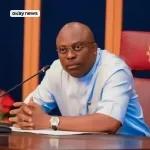
The Olubadan of Ibadanland, Oba Rashidi Ladoja, the forty-fourth traditional ruler of Ibadan, a historic city in southwestern Nigeria and the capital of Oyo State, has stepped into a prolonged leadership dispute that has troubled Ido town for nearly two decades.
The crisis surrounds the Onido stool, the traditional royal position in Ido, a town located in Ido Local Government Area of Oyo State, where three individuals are reportedly laying claim to the same throne. The unresolved dispute has generated deep divisions within the community and raised concerns among residents and stakeholders.
Oba Ladoja, while calling on all parties involved to remain calm and maintain peace, announced the formation of an investigative panel to examine both the historical origins and immediate causes of the dispute. According to the monarch, the panel will be officially inaugurated on Monday, January 12, 2026, at the Olubadan Palace in Oke Aremo, Ibadan, Nigeria.
Okay News reports that the intervention follows renewed agitation by residents of Ido town, who earlier raised fresh concerns about the continued absence of a unified traditional authority nearly nineteen years after the crisis began.
A statement issued on Wednesday in Ibadan by the Olubadan’s media aide, Adeola Oloko, confirmed the development but did not disclose the identities or composition of the committee members appointed to carry out the assignment.
Earlier, a group of concerned residents and community stakeholders, led by Sarafadeen Adeyeye, addressed journalists in Ibadan, urging decisive action from the Oyo State Government, headed by Governor Seyi Makinde, and the Olubadan of Ibadanland to prevent further deterioration of peace in the area.
Adeyeye described the situation in Ido as unstable, warning that the presence of multiple claimants to the Onido throne poses a serious threat to unity and development. He said, “At the moment, Ido is in a very delicate situation because we have three different people claiming to be the Onido, namely Oba Benjamin Ademola Ishola Orobiyi the Second, Tajudeen Akinola, and Muritala Babalola. This is unhealthy for any community.”
Providing historical context, Adeyeye noted that Ido Local Government was one of the five local governments that made up the Ibadan District before the administrative structure was abolished in 1956, underscoring the town’s long-standing cultural and political significance.
Confirming his direct involvement, Oba Ladoja explained that the panel would begin its work immediately after inauguration. He said, “Part of the panel’s mandate is to examine both the remote and immediate causes of the Onido stool crisis.”
He added, “The second mandate is to make far-reaching recommendations that will guide the Olubadan and his council in resolving the nineteen-year-old crisis once and for all.”
The monarch further stated that the committee was constituted in line with his authority as the prescribed and consenting figure on all chieftaincy matters within Ibadanland, emphasizing his commitment to restoring stability, order, and unity in Ido town.