
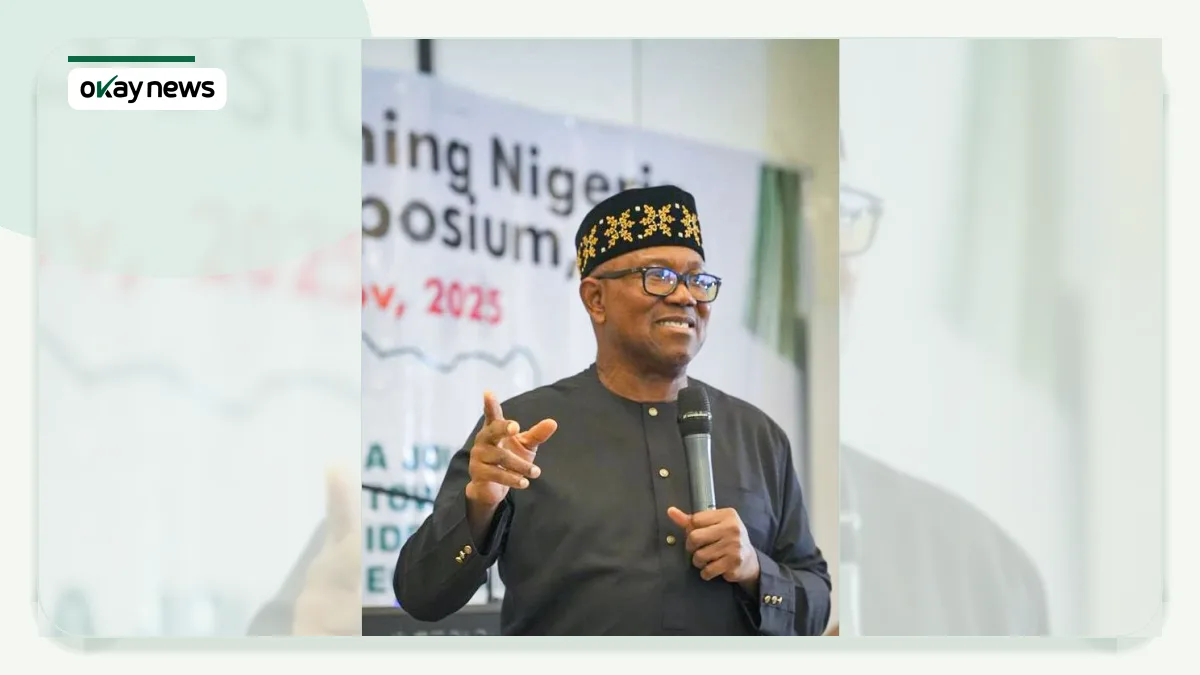
ABUJA, Nigeria — Former Labour Party presidential candidate Peter Obi has cautioned Nigerians against associating criminal activities such as banditry and terrorism with entire ethnic groups, saying innocent Fulani people are increasingly being unfairly judged because of the actions of a few criminals.
In a statement on Sunday, Obi said he understands the pain of ethnic stereotyping, recalling that as an Igbo man he has personally experienced being judged and labelled based solely on his ethnic background. He noted that such experiences are not unique to the Igbo people, arguing that many Nigerians have at one point faced prejudice because of their tribe.
Okay News reports that Obi specifically referenced the situation facing ordinary Fulani citizens, who he said are often unfairly linked to criminal elements involved in banditry and terrorism despite having no connection to such activities.
The former Anambra State governor stressed that crime should never be viewed through an ethnic lens, insisting that criminals should be identified and punished as individuals rather than being used to stigmatise entire communities.
“A thief is a thief. A terrorist is a terrorist. A kidnapper is a kidnapper. They are bad actors, not representatives of any people,” Obi said.
Drawing parallels with the civil rights movement in the United States, Obi cited the message of civil rights leader Martin Luther King Jr., who advocated judging people by their character rather than their identity.
He warned that blaming entire ethnic groups for the actions of a few individuals fuels division, hatred, and mistrust, while undermining efforts to build national unity. According to him, politicians and other vested interests often exploit ethnic stereotypes for personal gain.
Obi urged Nigerians to celebrate the country’s cultural diversity and focus on the positive contributions of different ethnic groups rather than promoting prejudice and collective blame.
He added that Nigeria must strive to become a nation where citizens are judged by their actions and character rather than their tribe, religion, or place of origin, expressing confidence that a more united and inclusive country remains achievable.