In a response to Cardinal Reinhard Marx and the German Bishops, Pope Leo XIV has clarified that the Vatican does not approve the formal blessing of same-sex couples or those in “irregular situations.”
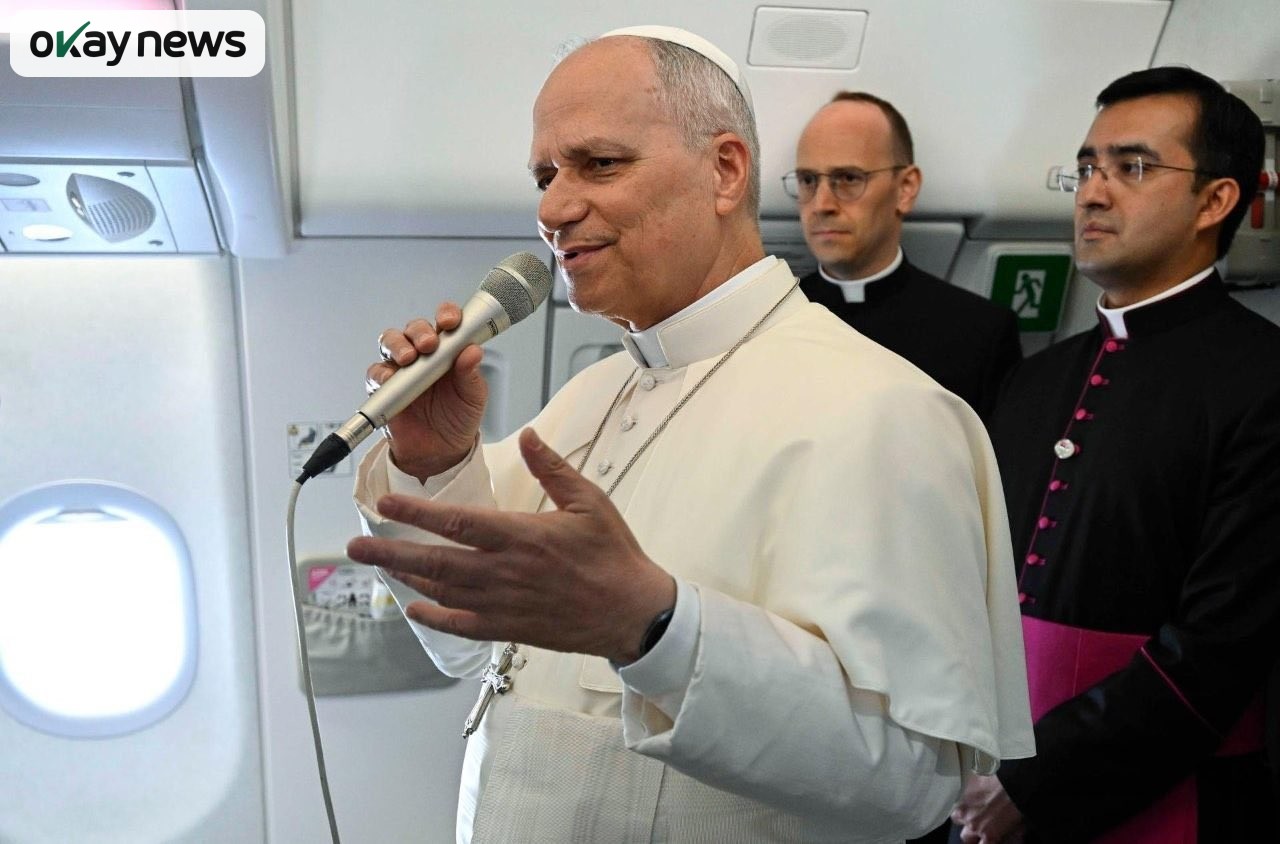
Speaking to reporters during his return flight from Equatorial Guinea on Thursday, the Pontiff emphasized that while individuals are always welcome, the Church must avoid actions that trigger disunity.
“The Holy See has made it clear that we do not agree with the formal blessing of couples—in this case, same-sex couples,” Leo stated.
Okay News reports that the Pope drew a distinction between the blessing of a union and the general blessing offered to “everyone, everyone, everyone” at the end of a Mass or papal celebration. He noted that to go beyond the specific permissions laid out by his predecessor, Pope Francis, could “cause more disunity than unity.”
The Pope also offered a broader critique of the current theological focus within the Church, arguing that sexual issues have disproportionately dominated the moral discourse. “We tend to think that when the Church speaks of morality, the only moral issue is a sexual one,” he observed. He urged the faithful to prioritize “larger and more important issues,” such as justice, equality, and religious freedom, over specific debates regarding sexual morality.
The response comes as a major blow to the German Synodal Path, which has been advocating for more progressive stances on LGBTQ+ inclusion and church governance. Pope Leo maintained that the Holy See had already communicated its position to the German leadership, reinforcing the conviction that the Church’s unity must be built on Jesus Christ and his teachings rather than contemporary social shifts.
As Pope Leo returns to the Vatican following his historic Africa tour, these comments are likely to set the tone for the upcoming session of the Synod on Synodality in October. By framing the issue as one of maintaining institutional cohesion, the Pope appears to be navigating a middle path between the Church’s traditional doctrines and the inclusive “everyone” rhetoric of the Francis era.