


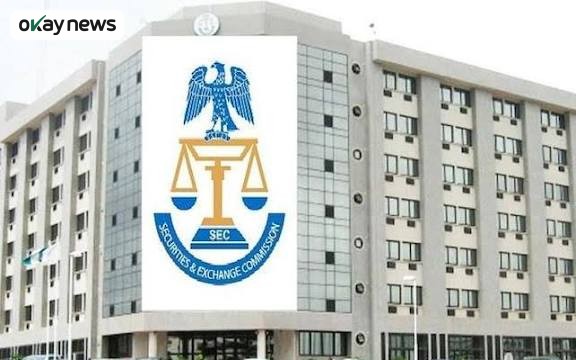
The Securities and Exchange Commission (SEC) has outlined a comprehensive 2026 agenda focused on directing long-term capital toward addressing Nigeria’s substantial infrastructure gaps.
Okay News reports that Director-General Dr. Emomotimi Agama announced the priorities in Abuja on Thursday, shifting emphasis from the short-term financing dominance seen in 2025.
The Commission aims to facilitate issuances of infrastructure bonds, municipal bonds, green bonds, and specialised funds to channel stable investments into critical sectors.
Agama stated that the goal is to attract domestic and international capital for roads, power, rail, housing, and digital infrastructure, while simplifying market access for state governments and project developers.
Nigeria’s infrastructure deficit requires an estimated $100 billion annually over coming decades, according to the Infrastructure Concession Regulatory Commission, manifesting in poor roads, unreliable electricity, inadequate rail networks, a housing shortfall exceeding 20 million units, and limited broadband.
The SEC views enhanced long-term financing as essential to reversing chronic underinvestment.
In agriculture, the agenda includes promoting agribusiness listings, dedicated windows for cooperatives, and commodity-linked instruments to mitigate price risks and enhance food security.
For housing, efforts will revive Real Estate Investment Trusts (REITs) and introduce affordable housing bonds to support mass delivery.
Manufacturing will benefit from revised rules encouraging listings by small and medium enterprises in sectors like automotive and pharmaceuticals to bolster local production.
Power sector initiatives will involve infrastructure bonds, green energy instruments, and public-private partnerships for grid expansion, renewables, and energy transition projects.
Agama described 2026 as an opportunity to reposition the capital market as a key driver of national development and sustainable growth.
This follows a 2025 cycle heavily reliant on short-term commercial papers amid high interest rates.

 has outlined a comprehensive 2026 agenda focused on directing long-term capital toward addressing Nigeria's substantial infrastructure gaps.)