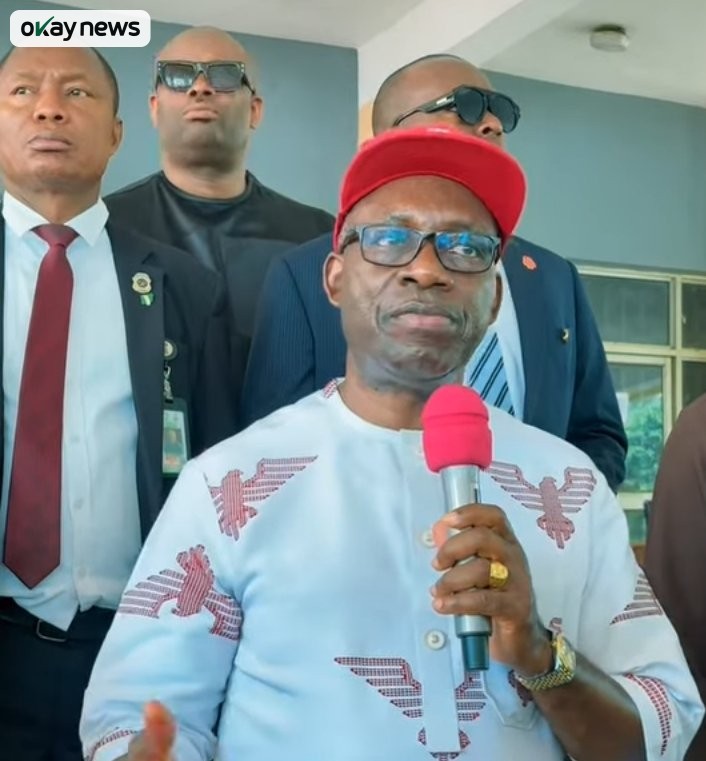
Awka, Anambra State, Nigeria – Governor Charles Chukwuma Soludo on Thursday carried out a surprise inspection at the Anambra State Secretariat in Awka, where he discovered widespread absenteeism among civil servants, sparking immediate disciplinary actions.
The unscheduled visit, which took place around 10:30 a.m., reportedly exposed a poor work culture across several ministries and departments, with many offices either half-empty or completely deserted during official hours. Investigations revealed that some workers had abandoned their duties for personal businesses, church activities, and other engagements, prompting the governor to order that the gates of the complex be shut as the exercise unfolded.
Okay News reports that the development caused panic among workers, many of whom rushed back to the Secretariat upon hearing of the governor’s presence. Some were seen arriving hurriedly, appearing distressed and unprepared, while others scrambled to confirm their status as officials began compiling attendance records. In several departments where at least eight to ten staff were expected, only a handful—or none at all—were found on duty.
During the inspection, Governor Soludo interacted with staff, heads of departments, and permanent secretaries, assessing punctuality, discipline, and overall commitment to duty. He described his findings as a mix of “the good, the bad, and the ugly,” commending diligent workers while warning that those failing to meet expectations would face consequences, including suspension or dismissal.
The governor emphasised that his administration would no longer tolerate inefficiency or indiscipline in the civil service, stressing that ongoing reforms are aimed at building a more responsive and results-driven workforce. He noted that investments in technology, supervision systems, and infrastructure upgrades at the Secretariat must be matched with improved productivity and accountability from staff.
Soludo further warned that any civil servant unwilling to align with the government’s reform agenda would be shown the exit, as the state pushes to strengthen public service delivery and ensure that the civil service effectively supports its broader development goals.